
Discovering black stains on your pillow can be unsettling. You’re not alone if you’ve wondered where these mysterious marks come from and, more importantly, how to get rid of them. Understanding the causes and implementing effective cleaning methods can restore your pillows to their pristine condition, ensuring a healthier and more comfortable sleep. This comprehensive guide will walk you through identifying, treating, and preventing these unwanted stains.
Understanding the Causes of Black Stains on Pillows
Before diving into cleaning techniques, it’s crucial to understand what causes those unsightly black stains on pillow surfaces. These stains aren’t just a cosmetic issue; they can indicate underlying problems affecting your sleep environment.
- Mold and Mildew: Dampness, body sweat, and poor ventilation can create an ideal breeding ground for mold and mildew. These fungi often manifest as dark, splotchy stains.
- Body Oils and Sweat: Natural body oils, sweat, and skin cells accumulate on pillows over time. These can react with dust and other particles, forming dark, stubborn stains.
- Cosmetics and Hair Products: Makeup, lotions, hair gels, and other beauty products can transfer onto your pillowcase, leading to discoloration.
- Environmental Factors: Dust, dirt, and pollutants in the air can settle on pillows, contributing to the formation of dark stains, especially if your windows are often open.
- Internal Pillow Issues: Sometimes, the filling inside your pillow can break down or develop internal mold, which seeps through the fabric.
Identifying Different Types of Black Stains
Accurately identifying the type of stain helps in selecting the most effective cleaning method.
- Mold/Mildew Stains: These typically have a musty odor and appear as dark, irregular spots.
- Oil and Sweat Stains: These are often yellowish or brownish initially, darkening over time. They might have a greasy texture.
- Cosmetic Stains: These vary in color and texture depending on the product but are often darker and more concentrated.
- Dust and Dirt Stains: These tend to be more diffuse and may appear as a general graying or darkening of the fabric.
Essential Cleaning Supplies for Removing Black Stains
Gathering the right supplies ensures effective stain removal.
- Mild Detergent: Choose a gentle, fragrance-free detergent suitable for delicate fabrics.
- Baking Soda: A natural cleaning agent that helps deodorize and lift stains.
- White Vinegar: Effective for disinfecting and removing mold and mildew.
- Hydrogen Peroxide: A powerful stain remover and disinfectant.
- Enzyme Cleaner: Specifically designed to break down organic stains like sweat and blood.
- Soft Cloths or Sponges: Avoid abrasive materials that can damage pillow fabric.
- Spray Bottle: For applying cleaning solutions evenly.
Step-by-Step Guide to Cleaning Black Stains
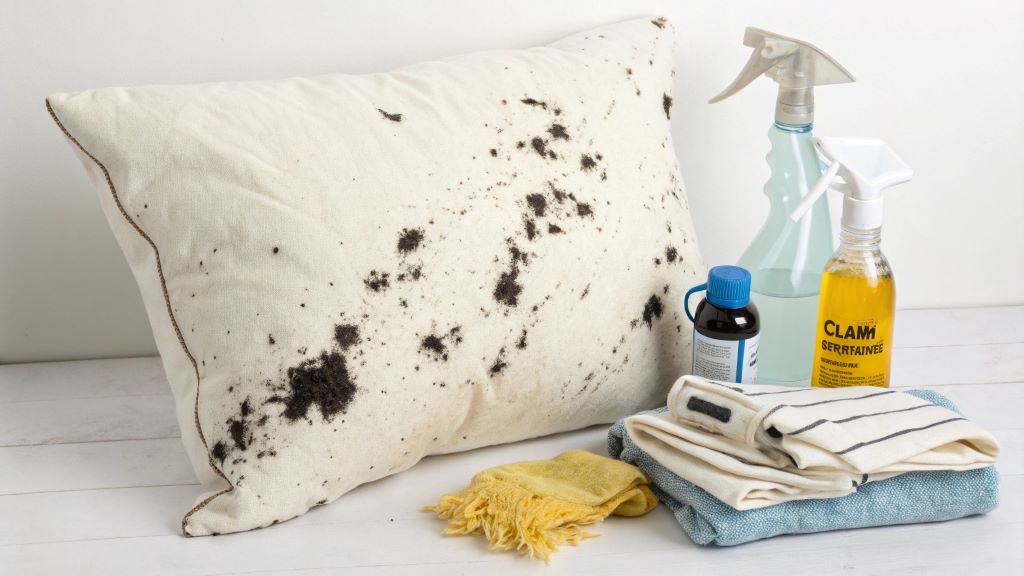
Follow these steps to effectively remove black stains on pillow surfaces.
-
Pre-Treatment for Stubborn Stains
- For mold or mildew, mix equal parts white vinegar and water in a spray bottle. Spray the affected area and let it sit for 15-30 minutes.
- For oil and sweat stains, apply a paste of baking soda and water to the stain and let it sit for at least an hour.
- For cosmetics or other tough stains, you can pre-treat with an enzyme cleaner according to the product’s instructions.
-
Washing Your Pillow
- Machine Washing: If your pillow is machine-washable, remove the pillowcase and place the pillow in the washing machine. Use a gentle cycle with cold or warm water and a mild detergent. Add a cup of white vinegar to the wash to help disinfect and deodorize.
- Hand Washing: For delicate pillows or those not machine-washable, fill a basin with lukewarm water and mild detergent. Gently submerge the pillow and agitate it to loosen stains. Rinse thoroughly with clean water.
-
Spot Treatment for Remaining Stains
- If stains persist after washing, apply a small amount of hydrogen peroxide directly to the affected area. Let it sit for 10-15 minutes before rinsing.
- For particularly stubborn mold stains, create a paste of baking soda, hydrogen peroxide, and a few drops of dish soap. Apply it to the stain and let it sit for 30 minutes before rinsing.
-
Drying Your Pillow
- Machine Drying: If machine drying is safe, use a low heat setting and add dryer balls to help fluff the pillow and prevent clumping.
- Air Drying: For delicate pillows, lay them flat on a clean surface or hang them in a well-ventilated area. Ensure they are completely dry to prevent mold growth.
Preventing Future Black Stains
Prevention is key to maintaining clean, stain-free pillows.
- Use Pillow Protectors: Invest in high-quality, waterproof pillow protectors to create a barrier against sweat, oils, and other contaminants.
- Wash Pillowcases Regularly: Wash your pillowcases at least once a week to prevent the buildup of oils and dirt.
- Maintain Proper Ventilation: Ensure your bedroom has good ventilation to minimize moisture buildup.
- Avoid Sleeping with Wet Hair: Wet hair can transfer moisture and contribute to mold growth.
- Limit Cosmetic Use Before Bed: Try to remove makeup and hair products before sleeping.
- Regularly Clean Your Bedding: In addition to pillow cases, wash your sheets and other bedding regularly.
The Best Detergent for Washing Organic Cotton Pillowcases: A Comprehensive Guide
Addressing Specific Pillow Types
Different pillow materials require specific cleaning approaches.
- Memory Foam Pillows: Spot clean with a damp cloth and mild detergent. Air dry thoroughly.
- Down and Feather Pillows: Machine wash on a gentle cycle with a mild detergent. Tumble dry on low heat with dryer balls.
- Latex Pillows: Hand wash with mild detergent and cold water. Air dry away from direct sunlight.
- Polyester Pillows: Machine wash on a gentle cycle with warm water. Tumble dry on low heat.
When to Seek Professional Cleaning
If home remedies fail or if your pillow is valuable or delicate, consider professional cleaning.
- Specialized Cleaning Services: Professionals have the expertise and equipment to handle tough stains and delicate materials.
- Dry Cleaning: For pillows with specific care instructions, dry cleaning may be the best option.
Call to Action
Don’t let black stains on pillow surfaces disrupt your sleep. Take action today! Implement these cleaning tips and prevention strategies to keep your pillows fresh and clean. If you’re struggling with stubborn stains or have delicate pillows, consider professional cleaning services. Share your experiences and tips in the comments below, and help others achieve a healthier sleep environment.
Read More:
HOW TO WASH SILK PILLOWCASES WITHOUT SHRINKING THEM: THE ULTIMATE GUIDE
ULTIMATE GUIDE TO PILLOW CARE: WASHING AND MAINTENANCE TIPS FOR EVERY TYPE

