
Sleeping on your side often helps reduce snoring and improves breathing, but it can also create pressure along the hips, lower back, and knees. Research from the National Sleep Foundation suggests that roughly 60 percent of adults prefer side sleeping, which means many people wake up with misaligned hips or lower back strain. Another study published by the National Institutes of Health shows that poor spinal alignment during sleep contributes to chronic lower back discomfort in a large share of adults.
A pillow leg spacer helps correct this alignment by keeping the knees and hips properly positioned throughout the night. When the legs stay parallel, pressure across the lower spine drops significantly. The result often feels subtle at first but becomes noticeable after several nights of consistent use.
This guide explores several well known options that aim to improve comfort and nighttime alignment.
A Quick Overview of The Best Pillow Leg Spacer for Side Sleepers
These products approach leg support in different ways. Some focus on compact knee alignment while others provide full leg elevation for circulation and recovery.
Top picks include:
- Contour Legacy Leg & Knee Foam Support Pillow for Side Sleepers
- MINUPWELL Knee Pillow for Side Sleepers
- Contour Legacy Leg & Knee Foam Support Pillow Original Version
- BlissfulNest Leisure Leg Elevation Pillow
- CushZone Leg Elevation Pillow with Pad and Memory Foam
- Contour Legacy Leg & Knee Foam Support Pillow Classic Model
- Momcozy Knee Pillow for Side Sleepers
Best Pillow Leg Spacer for Side Sleepers of 2026
A good leg spacer should feel natural rather than restrictive. The best models maintain alignment without forcing the legs into an uncomfortable position. The following products approach this balance in slightly different ways.
Contour Legacy Leg & Knee Foam Support Pillow for Side Sleepers
A breathable open design for natural alignment
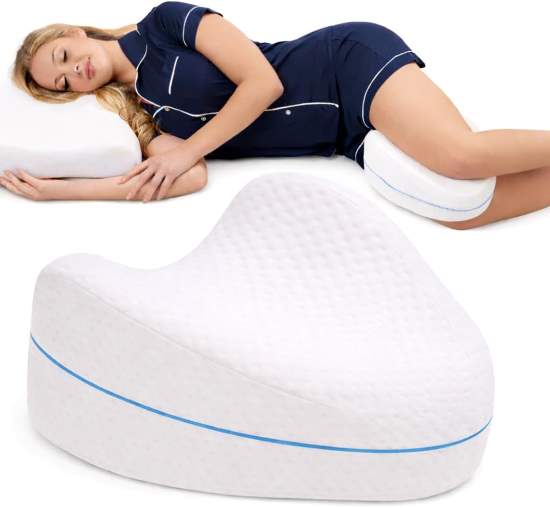
This design focuses on simplicity. The hourglass shaped foam sits between the knees and keeps both legs stacked comfortably. Unlike many traditional knee pillows, this model leaves the middle section open. That gap allows air circulation and reduces the trapped heat many foam pillows create.
In real use, the pillow feels light and unobtrusive. The curved shape tends to stay in place even when sleepers shift positions during the night. The foam itself provides moderate firmness. It supports the knees while allowing slight compression so the pillow does not feel rigid.
It suits side sleepers who move frequently or dislike straps that hold a pillow in place. The breathable structure also works well for warm climates or people who tend to sleep hot.
Cleaning remains simple because the cover removes easily. However, the open design may feel slightly narrow for people with broader legs who prefer thicker support.
User Review
Melissa R., Physical Therapist
I originally bought this for my lower back discomfort after long workdays. The biggest difference I noticed was how naturally it stays between the knees without adjusting it constantly. It feels supportive but not bulky. I also appreciate that it does not trap heat the way some foam pillows do.
Key Features
Quality: Responsive foam maintains shape through repeated nightly use.
Breathability: Open center improves airflow and reduces warmth buildup.
Ergonomic Design: Curved shape helps maintain hip alignment during sleep.
Size: Compact structure works well for standard side sleeping positions.
Maintenance: Removable cover simplifies regular washing.
Comfort Balance: Medium firmness prevents excessive pressure on knees.
Weight: Lightweight design reduces nighttime shifting.
Limitations: Narrow width may not suit wider leg spacing.
Pros and Cons
| Pros | Cons |
| Excellent airflow design | Narrow for wider legs |
| Lightweight and easy repositioning | No adjustable strap |
| Comfortable medium firmness | Limited thickness options |
MINUPWELL Knee Pillow for Side Sleepers
Soft fiber filled pillow with cotton cover
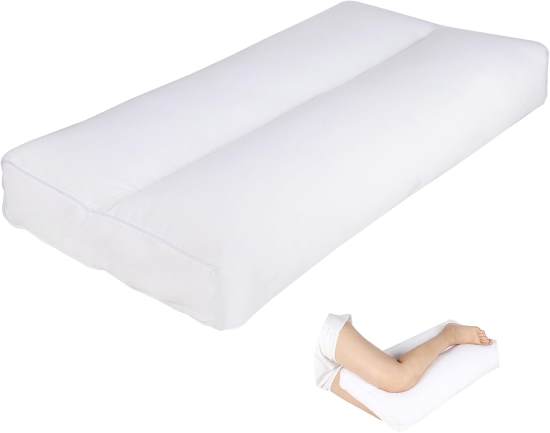
This pillow takes a softer approach compared with memory foam models. Instead of dense foam, it uses a fiber fill structure that compresses gently under body weight. The cotton fabric cover gives it a more traditional pillow feel.
In practice, the pillow feels plush and flexible. Some sleepers prefer this softness because it reduces pressure around sensitive knees. The pillow adapts to small changes in sleeping position rather than holding a fixed shape.
The design also works for back sleepers who place it under the knees to reduce lower back tension. The fill provides moderate lift while maintaining a cushion like softness.
However, fiber filling gradually compresses over time. Regular fluffing helps maintain height. People seeking firmer orthopedic support may prefer a memory foam alternative.
User Review
Kevin T., Software Developer
I like that this pillow feels like a regular cushion rather than a firm wedge. It helps keep my knees apart without feeling stiff. After about a month I noticed I needed to fluff it occasionally, but overall it stays comfortable.
Key Features
Material: 7D alternative fiber creates a plush support feel.
Cover Fabric: Cotton surface remains breathable and gentle on skin.
Versatility: Works between knees or under legs.
Weight Distribution: Soft fill reduces pressure points.
Maintenance: Machine washable cover simplifies cleaning.
Comfort Level: Ideal for sleepers who prefer softer support.
Adaptability: Compresses naturally during movement.
Limitations: Fiber fill may flatten with long use.
Pros and Cons
| Pros | Cons |
| Soft cushion like feel | May lose loft over time |
| Breathable cotton cover | Less orthopedic support |
| Versatile sleeping positions | Requires occasional fluffing |
Contour Legacy Leg & Knee Foam Support Pillow Original Version
Classic knee alignment support
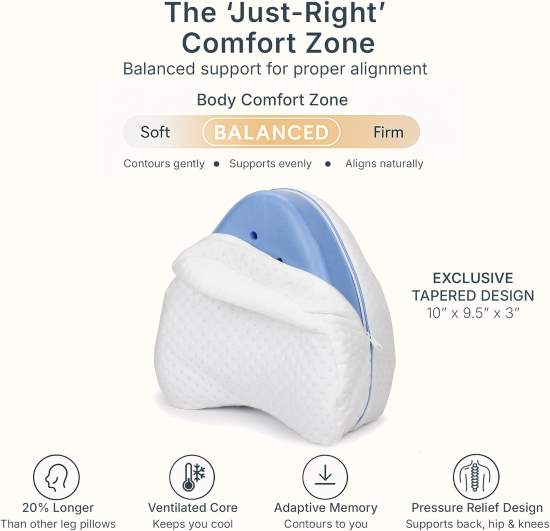
The original version of the Contour Legacy design focuses on consistent knee separation and spinal alignment. The memory foam structure sits securely between the knees and provides stable support throughout the night.
During real use, the pillow holds its shape better than many softer models. The foam maintains a steady distance between the legs, which helps reduce hip rotation while sleeping on the side.
This model works especially well for people who experience sciatica or hip pressure during sleep. The firmness helps maintain alignment even for heavier sleepers.
Maintenance remains simple because the cover removes easily for washing. However, some sleepers may find the foam slightly firm during the first few nights.
User Review
Daniel P., Long Distance Driver
My hips used to ache after sleeping on my side. After using this pillow for about a week I noticed less stiffness in the morning. It took a few nights to adjust to the firmness but now it feels natural.
Key Features
Support Level: Dense foam stabilizes knee position.
Ergonomic Shape: Designed to maintain hip and spine alignment.
Durability: Foam resists long term compression.
Size: Compact structure fits most sleeping positions.
Pressure Relief: Reduces contact stress around knees.
Maintenance: Removable cover allows easy washing.
Stability: Pillow stays in place overnight.
Limitations: Firm feel may require adjustment period.
Pros and Cons
| Pros | Cons |
| Strong alignment support | Slightly firm initially |
| Maintains shape well | Limited adjustability |
| Good for hip relief | Compact size only |
BlissfulNest Leisure Leg Elevation Pillow
Full leg wedge for circulation support
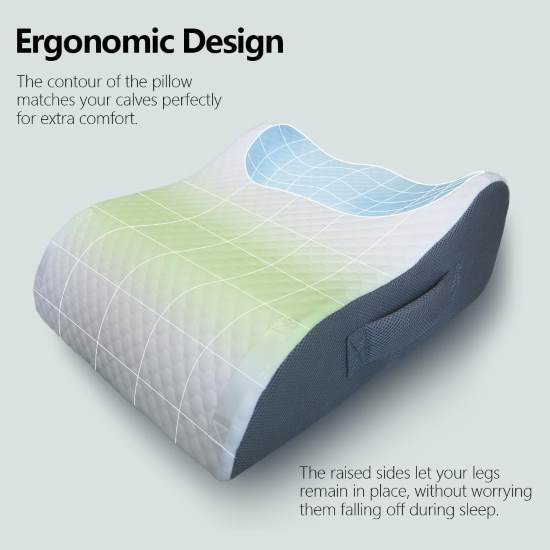
Unlike traditional knee spacers, this pillow supports the entire lower leg. The wedge design lifts the legs above the heart level which may help reduce swelling and fatigue after long days of standing.
In practice, the memory foam feels dense yet comfortable. The cooling fabric cover prevents excessive warmth during longer rest periods.
This pillow suits people recovering from surgery or managing circulation issues. It also works well for reading or resting in bed because it supports both legs evenly.
The tradeoff involves size. The wedge takes more space on the bed and may feel excessive for people who simply want knee alignment.
User Review
Carla M., Nurse
After long shifts my legs feel heavy and swollen. This wedge pillow lifts them enough that I feel noticeable relief within an hour. It is larger than a knee pillow but very comfortable for recovery nights.
Key Features
Elevation Height: Supports circulation by raising legs.
Foam Density: Memory foam maintains stable structure.
Cooling Fabric: Helps reduce heat during longer rest periods.
Surface Area: Supports both legs simultaneously.
Recovery Support: Suitable for post surgery rest.
Comfort Stability: Wide base prevents shifting.
Durability: Foam resists flattening.
Limitations: Larger footprint on bed.
Pros and Cons
| Pros | Cons |
| Effective leg elevation support | Requires more bed space |
| Comfortable cooling cover | Not ideal for side sleepers |
| Stable wedge design | Bulkier storage |
CushZone Leg Elevation Pillow with Pad and Memory Foam
Adjustable height recovery pillow
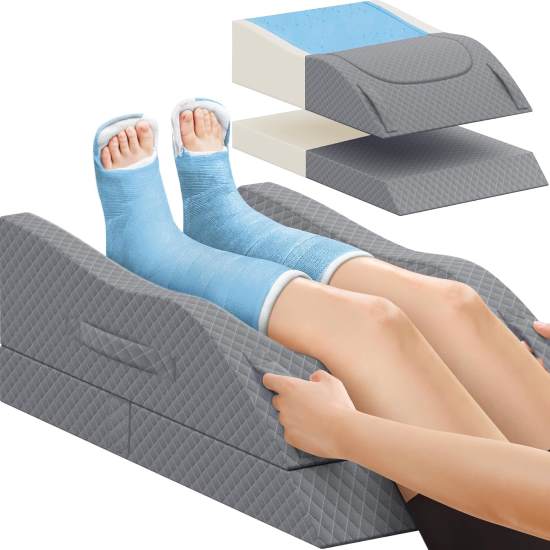
This model expands on the leg wedge concept by adding adjustable height layers. Users can modify the elevation depending on comfort or recovery needs.
The memory foam surface feels supportive without becoming overly rigid. The included pad adds extra cushioning, which helps reduce pressure around the calves and ankles.
In everyday use, the adjustable layers make a noticeable difference. Some users prefer lower elevation for relaxation while others raise it for swelling reduction.
Because of its size, it works best for recovery or circulation improvement rather than nightly side sleeping.
User Review
Thomas L., Retired Teacher
I bought this after knee surgery. The adjustable layers helped me find the right height during recovery. It feels sturdy and does not collapse even after several weeks.
Key Features
Adjustable Height: Layers allow customized elevation.
Memory Foam Core: Provides stable leg support.
Comfort Pad: Reduces pressure around calves.
Wide Platform: Supports both legs comfortably.
Durability: Foam holds shape over time.
Recovery Use: Helpful during post surgery rest.
Stability: Anti slip design keeps pillow in place.
Limitations: Too large for nightly side sleeping.
Pros and Cons
| Pros | Cons |
| Adjustable elevation layers | Bulky for daily sleep |
| Comfortable foam support | Takes storage space |
| Stable wide design | Less portable |
Contour Legacy Leg & Knee Foam Support Pillow Classic Model
A refined ergonomic alignment pillow
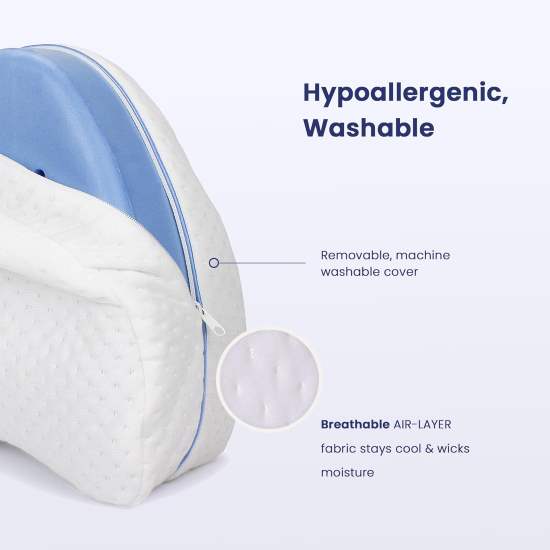
The classic model maintains the recognizable Contour Legacy shape but focuses on balanced support and durability. The memory foam remains slightly firmer than many entry level knee pillows.
In nightly use, the pillow keeps the legs comfortably spaced while preventing hip rotation. The shape fits naturally between the thighs without creating pressure around the knees.
Many side sleepers appreciate that it stays positioned even during movement. The foam gradually conforms to the leg shape, which improves comfort over time.
However, the pillow works best for consistent side sleepers. Combination sleepers who frequently switch positions may need to reposition it occasionally.
User Review
Rachel S., Graphic Designer
I tend to move during sleep, and this pillow surprisingly stays between my knees most nights. It feels firm enough to keep alignment but still comfortable.
Key Features
Foam Structure: Balanced firmness supports alignment.
Ergonomic Contour: Fits natural leg shape.
Durability: Memory foam resists deformation.
Compact Size: Easy to reposition during sleep.
Breathable Cover: Reduces warmth buildup.
Support Stability: Maintains knee spacing.
Maintenance: Removable washable cover.
Limitations: Best suited for side sleeping.
Pros and Cons
| Pros | Cons |
| Balanced firmness support | Limited for back sleepers |
| Comfortable ergonomic shape | Not adjustable |
| Durable foam structure | May shift for active sleepers |
Momcozy Knee Pillow for Side Sleepers
Adjustable design for personalized comfort
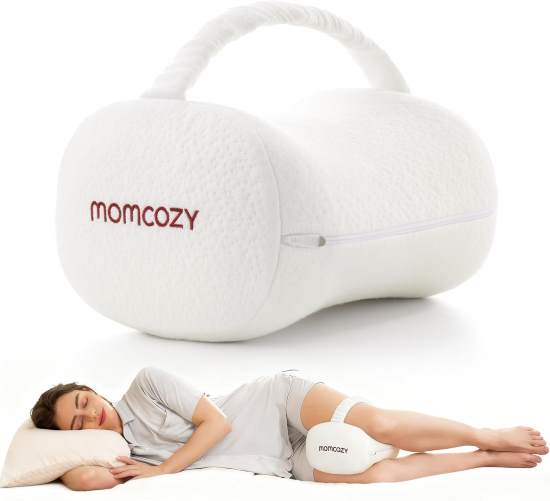
This pillow introduces a small adjustment feature that lets users fine tune the spacing between their knees. The pinch free design prevents pressure on sensitive joints.
The foam feels moderately soft while still maintaining structure. The adjustable strap helps keep the pillow secure through the night, which benefits restless sleepers.
In practice, the pillow works well for people who often wake up to reposition their knee spacer. The strap keeps alignment stable without feeling restrictive.
Maintenance remains simple thanks to the removable cover. However, some sleepers prefer a strap free design for unrestricted movement.
User Review
Lauren B., Fitness Trainer
I move constantly during sleep and most knee pillows end up on the floor. The strap on this one keeps it in place without feeling tight. It makes a noticeable difference for my hips.
Key Features
Adjustable Strap: Keeps pillow positioned overnight.
Foam Support: Balanced firmness prevents knee pressure.
Pinch Free Shape: Designed to protect sensitive joints.
Size: Compact structure suits most body types.
Breathable Fabric: Reduces heat buildup.
Stability: Strap helps active sleepers maintain alignment.
Maintenance: Removable cover allows easy washing.
Limitations: Strap may feel restrictive for some users.
Pros and Cons
| Pros | Cons |
| Adjustable secure fit | Strap may bother some |
| Comfortable foam support | Slightly smaller design |
| Good for restless sleepers | Limited thickness control |
Buying Guide
Choosing a leg spacer pillow often seems simple, but several factors influence whether the pillow actually improves sleep posture. Many buyers focus on shape alone while overlooking the deeper aspects that determine long term comfort and support.
What Actually Matters Before Choosing
Support and Alignment Performance
The primary purpose of a leg spacer pillow involves maintaining neutral hip and spine alignment. When the knees stack directly above each other, the pelvis stays balanced and the lower back experiences less rotational stress.
Many buyers assume thicker pillows automatically provide better alignment. In reality, excessive height can tilt the hips upward and create new strain points. The correct thickness depends on body width, mattress softness, and sleeping posture.
Over time, proper alignment reduces pressure accumulation around the lumbar spine and hips. A pillow that keeps this alignment consistent throughout the night often produces better results than one that simply feels soft.
Material Quality and Durability
Most leg spacer pillows rely on either memory foam or fiber filling. Each material behaves differently over months of use.
Memory foam generally retains its structure longer and offers stable support. Fiber filled pillows feel softer but tend to compress gradually. Buyers sometimes misunderstand this difference and choose softness without considering longevity.
Durable materials help maintain consistent spacing between the knees. When a pillow flattens, the hips begin rotating again and the original benefit disappears.
Comfort and Usability
Comfort involves more than softness. A pillow should feel unobtrusive during natural sleep movement.
Some models use straps or fixed shapes to keep the pillow in place. Others rely on contour design alone. Neither approach suits everyone. People who move frequently may appreciate a strap while lighter sleepers might prefer a strap free design.
Temperature regulation also affects comfort. Dense foam can trap heat, which makes breathable covers or open designs valuable for long term usability.
Maintenance and Ownership Effort
A pillow that supports the legs every night inevitably collects body oils and dust. Removable covers make cleaning significantly easier.
Buyers often overlook this practical detail. Washing a pillow cover regularly extends the usable life of the foam and keeps the surface hygienic.
Foam pillows also benefit from occasional airing to prevent odor buildup.
Environmental and Situational Compatibility
Bedroom temperature, mattress softness, and sleeping position all influence pillow performance.
For example, a very soft mattress may require a firmer spacer pillow to prevent the knees from sinking too deeply. Meanwhile firmer mattresses often pair better with softer pillows that cushion the joints.
Sleep environment also matters. Warm climates often benefit from breathable materials or ventilated foam structures.
Safety and Body Support
A leg spacer should not force the legs apart beyond a natural position. Excessive spacing may strain the hips or inner thighs.
A good pillow supports the legs gently while allowing natural muscle relaxation. Proper size and contour design usually achieve this balance.
Common Buyer Mistakes
Many people assume that all knee pillows provide the same benefits. This misunderstanding often leads to poor product selection.
One common mistake involves choosing the softest pillow available. While softness may feel comfortable initially, overly compressible materials often flatten quickly. When that happens, the pillow stops maintaining leg alignment.
Another frequent mistake involves ignoring pillow size. Some buyers select compact models even though their body frame requires thicker spacing. The result often feels unstable because the legs continue rotating inward.
Some people also overlook sleep movement patterns. Active sleepers benefit from designs that stay secured or naturally grip the legs. Without this stability, the pillow shifts away during the night.
Another mistake involves focusing only on knee comfort rather than hip alignment. A pillow that cushions the knees but fails to support the thighs may still allow pelvic rotation.
Lastly, buyers sometimes overlook temperature management. Dense foam without ventilation can trap heat and disrupt sleep, especially in warmer climates.
Related:
Cervical Neck Pillow Material Impact on Neck Support Quality
Bolsters and Pillows for Full-Body Relaxation Techniques
How to Match Products to Specific Needs
Casual Sleep Support
People seeking mild nighttime comfort often prefer compact foam knee pillows. These models maintain basic alignment while remaining easy to reposition during sleep.
Heavy Daily Use
Individuals with chronic hip or back discomfort often benefit from firmer memory foam models. These pillows maintain consistent spacing throughout the night and resist compression.
Recovery or Circulation Needs
People recovering from surgery or dealing with swelling often need full leg elevation rather than simple knee spacing. Wedge pillows designed for elevation usually provide better support in these situations.
Limited Bed Space
Compact knee pillows work best in smaller sleeping spaces. Large wedge pillows may occupy too much room on standard beds.
Active Sleepers
Restless sleepers often benefit from pillows with straps or curved shapes that stay positioned between the knees. Stability prevents frequent repositioning.
Conclusion
A well chosen leg spacer pillow can improve nighttime alignment and reduce pressure on the hips and lower back. The difference usually comes from small design details such as foam density, shape stability, and airflow.
Some sleepers prefer compact knee spacers that maintain subtle alignment. Others benefit from larger elevation pillows that support circulation and recovery.
The best option depends on how you sleep, how much support your body needs, and how much space you have available. Taking these factors into account makes it easier to find a pillow that fits naturally into your nightly routine.
FAQs
Do leg spacer pillows help with lower back pain
They can reduce strain by keeping the hips aligned during side sleeping.
How thick should a knee pillow be
The pillow should keep the knees parallel without lifting the upper leg excessively.
Can back sleepers use a leg spacer pillow
Yes, many models work under the knees to relieve lower back pressure.
How often should the pillow cover be washed
Most users wash the cover every one to two weeks.
Do memory foam knee pillows lose shape
High quality foam typically maintains structure longer than fiber filled pillows.

