
Side sleeping is one of the most common sleep positions, with over 60% of people preferring it, according to a National Sleep Foundation survey. Yet, many side sleepers wake up with aches, pains, and stiffness, especially in their hips, knees, and lower back. I used to be one of them. No matter how comfortable my mattress was, I’d often wake up feeling like I’d run a marathon in my sleep. That changed when I discovered the simple yet transformative power of a knee pillow. Placing a pillow between my knees aligned my spine, reduced pressure on my joints, and finally gave me the restful sleep I’d been missing.
A knee pillow is a small but mighty tool designed to support your legs and maintain proper spinal alignment while you sleep. If you’re a side sleeper struggling with discomfort, exploring the benefits of a knee pillow sleep setup could be the solution you’ve been searching for. It’s not just about comfort—it’s about waking up feeling refreshed and pain-free.
Why a Knee Pillow Is Essential for Side Sleepers
Side sleeping has its advantages, such as reducing snoring and improving digestion, but it can also put stress on your hips, knees, and lower back. Without proper support, your top leg can pull your spine out of alignment, leading to discomfort and even chronic pain over time. A knee pillow helps by keeping your legs parallel and your spine in a neutral position, which reduces pressure on your joints and muscles.
According to a study published in the Journal of Physical Therapy Science, using a knee pillow can significantly reduce lower back pain and improve sleep quality for side sleepers. The pillow acts as a cushion between your knees, preventing them from rubbing together and reducing strain on your hip joints. Additionally, it helps maintain the natural curve of your spine, which is crucial for preventing long-term issues like sciatica or degenerative disc disease.
For pregnant women, a knee pillow can be especially beneficial. As the body changes, finding a comfortable sleep position becomes more challenging. A knee pillow provides much-needed support for the growing belly and helps alleviate pressure on the lower back and hips. It’s a simple yet effective way to improve comfort and sleep quality during pregnancy.
Key Features to Look for in a Knee Pillow
Not all knee pillows are created equal. To get the most out of your investment, it’s important to choose a model that aligns with your specific needs. Here are the key features to consider:
1. Material and Firmness
The material of your knee pillow plays a significant role in its comfort and durability. Memory foam is a popular choice for its ability to contour to your body, providing personalized support and pressure relief. It’s also hypoallergenic and resistant to dust mites, making it a great option for allergy sufferers.
Additionally, consider the firmness of the pillow. A firmer pillow provides more support and is ideal for those who need extra stability, such as people with chronic pain or joint issues. A softer pillow, on the other hand, may be more comfortable for those who prefer a plusher feel or have sensitive skin.
2. Size and Shape
Knee pillows come in a variety of sizes and shapes to suit different needs. A standard rectangular pillow is the most common and versatile, fitting comfortably between your knees or thighs. However, some models feature a contoured or hourglass shape, which can provide a more secure fit and prevent the pillow from slipping during the night.
Additionally, consider the size of the pillow in relation to your body. If you’re taller or have longer legs, a larger pillow may be more comfortable. Conversely, if you’re shorter or have a smaller frame, a compact pillow may be a better fit.
3. Cover Material
The cover of your knee pillow should be soft, breathable, and easy to clean. Look for a model with a removable, machine-washable cover made from high-quality materials like cotton, bamboo, or a hypoallergenic fabric. This ensures that your pillow stays fresh and hygienic, even with regular use.
Additionally, consider the texture of the cover. A smooth, cool-to-the-touch fabric can enhance your comfort, especially during warmer months. Some covers also feature moisture-wicking properties, which can help keep you dry and comfortable throughout the night.
4. Portability and Storage
If you plan to use your knee pillow while traveling or on the go, portability is an important consideration. Look for a model that’s lightweight and compact, making it easy to pack in a suitcase or carry-on bag. Some knee pillows even come with a travel bag or case for added convenience.
Additionally, consider how easy it is to store the pillow when not in use. Some models feature a compact design that fits easily in a drawer or closet, while others may require more space.
5. Durability and Build Quality
A knee pillow is an investment in your comfort and health, so it’s important to choose a model that’s built to last. Look for a pillow made from high-quality materials that can withstand regular use without losing its shape or support.
Additionally, check the stitching and seams of the pillow. Reinforced stitching can prevent the pillow from tearing or coming apart over time. Some models also feature a non-slip bottom, which can keep the pillow in place between your knees during the night.
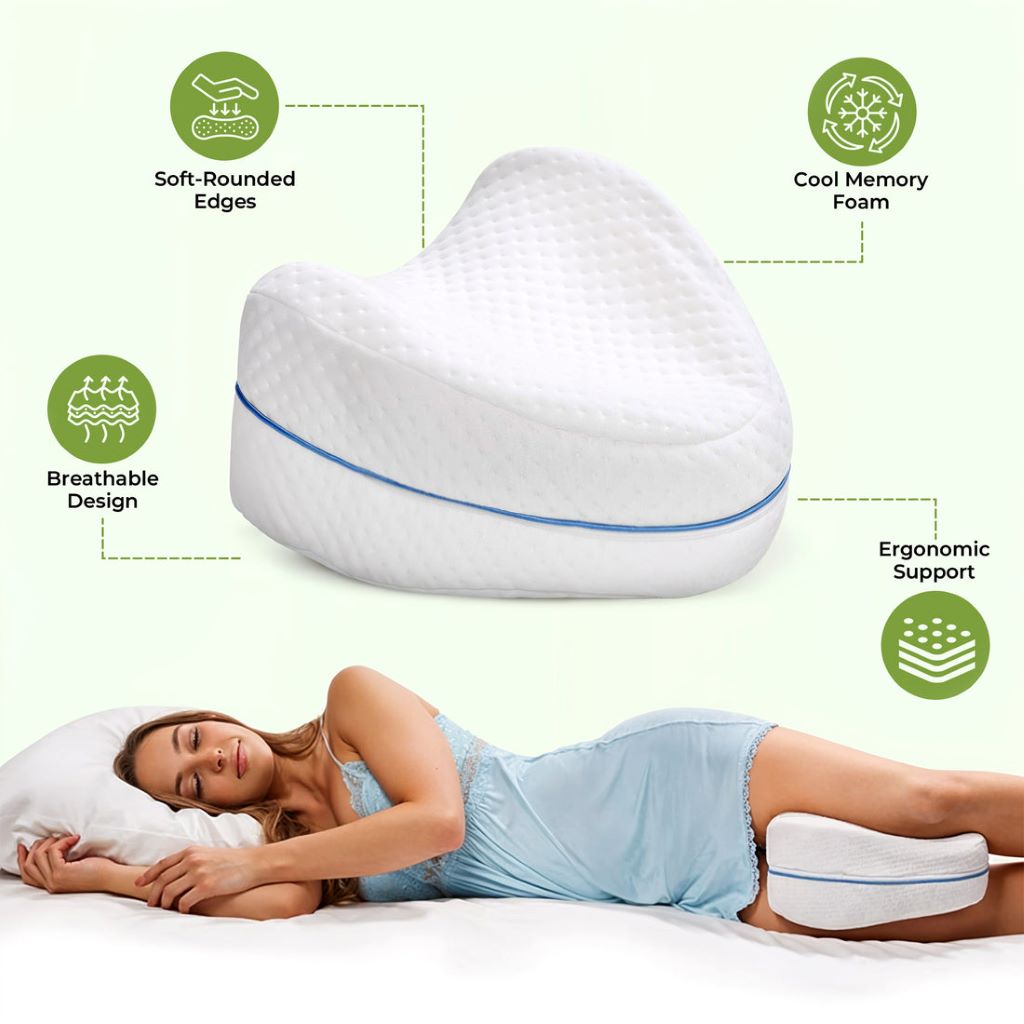
How to Use a Knee Pillow for Maximum Comfort and Alignment
Using a knee pillow correctly is key to reaping its benefits. Here’s how to position it for optimal comfort and spine alignment:
1. Placement Between the Knees
The most common way to use a knee pillow is to place it between your knees while lying on your side. This helps keep your legs parallel and your spine in a neutral position, reducing pressure on your hips and lower back. Make sure the pillow is snug but not too tight, as this can cause discomfort or restrict circulation.
Additionally, consider the height of the pillow. It should be thick enough to keep your legs aligned but not so thick that it forces your top leg to lift too high. A pillow that’s too thick can cause your spine to twist, while one that’s too thin may not provide enough support.
2. Placement Between the Thighs
If you prefer to sleep with your top leg resting on your bottom leg, you can also place the knee pillow between your thighs. This position helps maintain the natural alignment of your spine and reduces strain on your hip joints. It’s especially useful for those who tend to shift positions during the night.
Additionally, this position can help prevent your top leg from pulling your spine out of alignment, which is a common issue for side sleepers. It also reduces pressure on your lower back and hips, allowing you to wake up feeling more refreshed.
3. Under the Knees for Back Sleepers
While knee pillows are primarily designed for side sleepers, they can also be beneficial for back sleepers. If you sleep on your back, place the pillow under your knees to elevate your legs slightly. This helps reduce pressure on your lower back and promotes better spinal alignment.
Additionally, elevating your legs can improve circulation and reduce swelling in your feet and ankles. This can be especially beneficial for those who spend long hours on their feet during the day or deal with conditions like edema.
4. For Pregnancy Support
Pregnant women can use a knee pillow to support their growing belly and alleviate pressure on their lower back and hips. Place the pillow between your knees while lying on your side, and consider using an additional pillow under your belly for extra support.
Additionally, a knee pillow can help improve circulation and reduce swelling in your legs and feet, which are common issues during pregnancy. It’s a simple yet effective way to enhance comfort and sleep quality during this special time.
5. For Post-Surgery Recovery
If you’re recovering from surgery, such as a hip replacement or knee procedure, a knee pillow can provide much-needed support and alignment. Place the pillow between your knees while lying on your side to keep your legs in a neutral position and reduce strain on your incision.
Additionally, elevating your legs with a knee pillow can promote better circulation and reduce swelling, which can speed up the healing process. Always follow your doctor’s recommendations for post-surgery care and positioning.
Common Mistakes to Avoid When Using a Knee Pillow
Even with the best intentions, it’s easy to make mistakes when using a knee pillow. Here are some common pitfalls to avoid:
1. Choosing the Wrong Size
One of the most common mistakes is choosing a knee pillow that’s the wrong size for your body. A pillow that’s too small may not provide enough support, while one that’s too large can be cumbersome and uncomfortable. Consider the dimensions of the pillow and how it will fit between your knees or thighs.
Additionally, think about your sleeping position. If you tend to shift around a lot during the night, a larger pillow may be more stable and secure. If you prefer to stay in one position, a smaller pillow may suffice.
2. Using the Wrong Material
The material of your knee pillow can impact its comfort, durability, and support. Avoid choosing a pillow based solely on price or appearance. Instead, consider the material’s ability to contour to your body, provide support, and withstand regular use.
Additionally, think about any allergies or sensitivities you may have. If you’re allergic to certain materials, such as latex or synthetic fabrics, choose a hypoallergenic option to avoid irritation.
3. Placing the Pillow Incorrectly
The placement of your knee pillow is crucial for its effectiveness. Avoid placing it too high or too low between your knees, as this can cause misalignment or discomfort. The pillow should be positioned snugly between your knees or thighs, with your legs parallel and your spine in a neutral position.
Additionally, make sure the pillow stays in place throughout the night. If it tends to slip or shift, consider using a model with a non-slip bottom or a contoured shape that fits more securely between your legs.
4. Not Replacing When Necessary
Over time, even the highest-quality knee pillow can lose its shape and support. If you notice that your pillow is no longer providing the comfort and alignment it once did, it may be time to replace it. A worn-out pillow can do more harm than good, so don’t hesitate to invest in a new one when needed.
Additionally, keep an eye out for signs of wear and tear, such as lumps, sagging, or a loss of firmness. These can indicate that the pillow is no longer providing the support you need.
5. Ignoring Your Sleep Position
Your sleep position plays a significant role in how effective your knee pillow will be. If you’re a side sleeper, placing the pillow between your knees or thighs can help maintain spinal alignment and reduce pressure on your joints. If you’re a back sleeper, placing the pillow under your knees can elevate your legs and reduce strain on your lower back.
Additionally, consider any specific issues you’re dealing with, such as chronic pain, pregnancy, or post-surgery recovery. These may require a different approach to using your knee pillow for optimal comfort and support.
Tips for Getting the Most Out of Your Knee Pillow
To maximize the benefits of your knee pillow, follow these tips for optimal use:
1. Experiment with Placement
Don’t be afraid to experiment with different placements to find what works best for you. Try placing the pillow between your knees, between your thighs, or even under your knees if you’re a back sleeper. The right position may vary depending on your specific needs and preferences.
Additionally, consider adjusting the height of the pillow. If it feels too thick or too thin, try folding it or using a different model to find the perfect fit.
2. Combine with Other Pillows
A knee pillow can be even more effective when used in combination with other pillows. For example, you might use a body pillow for additional support or a contour pillow for your head and neck. This can provide a more comprehensive solution for your sleep comfort and alignment.
Additionally, consider using a pillow under your belly if you’re pregnant or a lumbar support cushion if you deal with lower back pain. This can enhance the benefits of your knee pillow and help you stay comfortable throughout the night.
3. Use It for More Than Just Sleep
A knee pillow isn’t just for sleep—it’s also a great tool for relaxing and recovering. Use it while watching TV, reading, or working on your laptop to reduce strain on your joints and improve your posture. The gentle support can make it easier to stay comfortable for extended periods.
Additionally, consider using the pillow for stretching or physical therapy exercises. It can provide support and alignment for your legs and spine, making it easier to perform certain movements or stretches.
4. Travel with It
If you’re on the go, don’t leave your knee pillow behind. Many models are lightweight and portable, making them easy to take with you on trips or vacations. Use it in your hotel room, RV, or even on a long flight to ensure you get the comfort and support you need, no matter where you are.
Additionally, consider using the pillow in your car or truck for added comfort during long drives. This can help reduce fatigue and discomfort, making your journey more enjoyable.
5. Clean and Maintain Regularly
To extend the life of your knee pillow and ensure it remains hygienic, clean and maintain it regularly. Follow the manufacturer’s instructions for cleaning, which may include spot cleaning, machine washing the cover, or using a protective cover to extend the pillow’s lifespan.
Additionally, keep an eye out for signs of wear and tear, such as lumps, sagging, or a loss of firmness. These can indicate that the pillow is no longer providing the support you need and may need to be replaced.
The Science Behind Knee Pillows: How They Improve Sleep
Knee pillows are more than just a comfort tool—they’re backed by science. The support they provide can have a significant impact on your sleep quality and overall health. Here’s how they work:
1. Promotes Spine Alignment
One of the primary benefits of a knee pillow is its ability to promote proper spine alignment. When you sleep on your side without a pillow between your knees, your top leg can pull your spine out of alignment, leading to discomfort and strain. A knee pillow helps keep your legs parallel and your spine in a neutral position, reducing pressure on your joints and muscles.
According to a study published in the Journal of Orthopaedic & Sports Physical Therapy, maintaining proper spinal alignment during sleep can reduce the risk of developing chronic pain and improve overall sleep quality. This makes knee pillows a simple yet effective solution for those dealing with back, hip, or knee pain.
2. Reduces Pressure on Joints
A knee pillow helps distribute your body weight more evenly, reducing pressure on your hips, knees, and lower back. This is especially beneficial for side sleepers, who often experience discomfort in these areas due to the uneven distribution of weight.
Additionally, the cushioning provided by the pillow can absorb shock and reduce friction between your knees, preventing discomfort and irritation. This can be particularly useful for those with arthritis or other joint issues.
3. Improves Circulation
Elevating your legs with a knee pillow can improve circulation, reducing swelling and discomfort in your extremities. This is especially beneficial for those who spend long hours on their feet or deal with conditions like edema or varicose veins.
Additionally, better circulation can promote faster healing and recovery, making knee pillows a valuable tool for those recovering from surgery or injury. It can also help reduce the risk of developing blood clots or other circulatory issues.
4. Alleviates Pain
Knee pillows can help alleviate pain by providing support and alignment for your spine, hips, and knees. For example, elevating your legs can reduce pressure on your lower back, while keeping your knees aligned can alleviate tension in your hip joints.
Additionally, the gentle support provided by the pillow can help reduce muscle strain and promote relaxation, making it easier to fall asleep and stay asleep throughout the night. This can be especially beneficial for those dealing with chronic pain or discomfort.
5. Enhances Sleep Quality
By promoting proper alignment, reducing pressure on your joints, and improving circulation, a knee pillow can enhance your overall sleep quality. This can lead to deeper, more restorative sleep, leaving you feeling more refreshed and energized in the morning.
Additionally, the comfort and support provided by the pillow can help you fall asleep faster and stay asleep longer. This can be especially beneficial for those who struggle with insomnia or other sleep disorders.
Conclusion
A knee pillow is a simple yet powerful tool for improving your sleep comfort and spine alignment. By choosing the right model, using it effectively, and understanding the science behind its benefits, you can transform the way you rest and wake up. Whether you’re a side sleeper dealing with discomfort, a pregnant woman seeking support, or someone recovering from surgery, a knee pillow can make a world of difference.
Remember, the best knee pillow is the one that fits your specific needs and preferences. Take your time, explore the features, and don’t be afraid to experiment with different placements and positions. With the right approach, your knee pillow can become an essential part of your sleep routine.
Have you tried using a knee pillow for better sleep? Share your experiences, tips, or favorite models in the comments below! If you found this article helpful, don’t forget to share it with your friends and family. Here’s to better sleep, better comfort, and better health!
FAQs
What is a knee pillow?
A knee pillow is a small, firm pillow designed to be placed between your knees or thighs while you sleep. It helps maintain proper spinal alignment, reduces pressure on your joints, and improves overall comfort.
How do I choose the right knee pillow for me?
Consider factors like material, firmness, size, shape, and cover material. Think about your specific needs, such as side sleeping, pregnancy support, or post-surgery recovery, and choose a pillow that aligns with those requirements.
Can I use a knee pillow if I’m a back sleeper?
Yes, back sleepers can place a knee pillow under their knees to elevate their legs slightly. This helps reduce pressure on the lower back and promotes better spinal alignment.
How do I clean my knee pillow?
Follow the manufacturer’s instructions for cleaning. This may include spot cleaning, machine washing the cover, or using a protective cover to extend the pillow’s lifespan. Always use mild detergent and avoid harsh chemicals.
How long does a knee pillow last?
The lifespan of a knee pillow depends on its quality, material, and how well you maintain it. A high-quality pillow can last several years with proper care. However, if you notice signs of wear and tear, such as lumps or sagging, it may be time to replace it.

