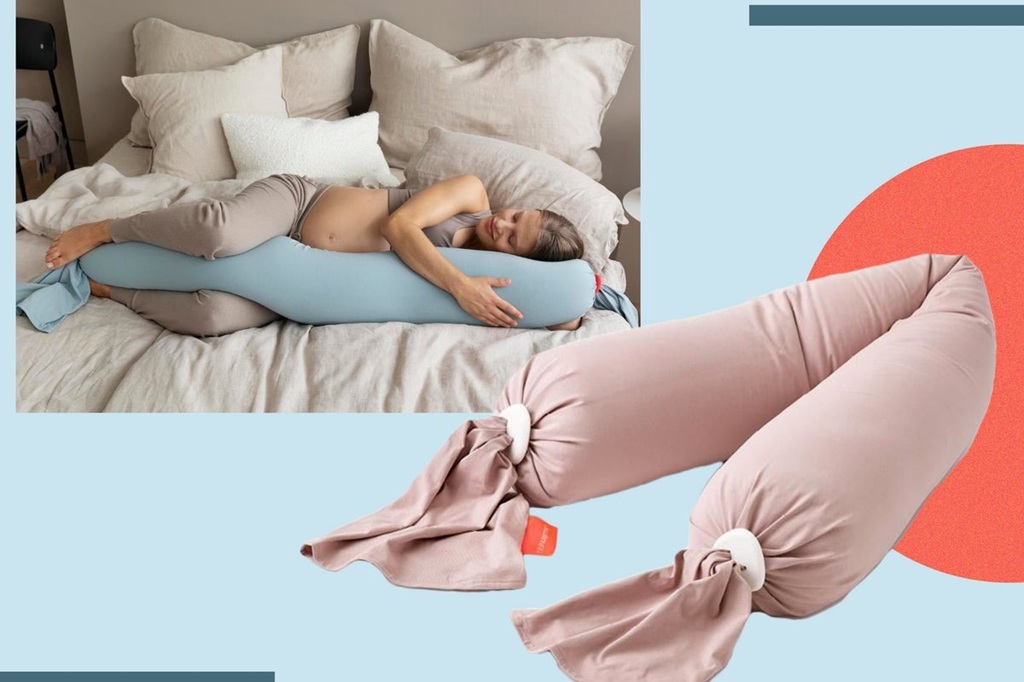
Neck pain has become a common problem for modern sleepers. According to the National Institutes of Health, roughly 30 percent of adults experience neck pain every year, and poor sleeping posture often contributes to the problem. The American Chiropractic Association also reports that sleep position and pillow design play a significant role in spinal alignment and long term neck comfort.
Many people try to fix neck pain by replacing mattresses or changing sleep habits, but the pillow often has the biggest daily impact. A well designed cervical pillow supports the natural curve of the neck and helps keep the spine aligned during the night.
This guide explores several chiropractor inspired pillows for neck pain relief designs that aim to reduce neck strain while accommodating different sleep positions. Each option below focuses on real world comfort, usability, and long term practicality rather than marketing claims.
A Quick Overview of The Best Best Pillow for Neck Pain Relief in 2026
These pillows for neck pain relief focus on ergonomic support, contour design, and adjustable memory foam to help maintain spinal alignment during sleep.
- Derila Cervical Pillow for Sleeping Ergonomic Memory Foam Neck Support Pillow for Side Back and Stomach Sleepers
- Osteo Cervical Pillow for Neck Pain Relief Odorless Adjustable Orthopedic Contour Memory Foam Pillow
- Royal Therapy Pharmonis Adjustable Orthopedic Cervical Pillow for Neck Pain Relief
- Osteo Cervical Pillow for Neck Pain Relief with Breathable Cover
- Derila Cervical Pillow for Sleeping Ergonomic Memory Foam Neck Support Orthopedic Contour Pillow
- Royal Therapy Pharmonis Adjustable Orthopedic Cervical Pillow with Contour Memory Foam Design
- Cervical Ergonomic Pillow for Sleeping Odorless Orthopedic Memory Foam Neck Support Pillow
- Coop Home Goods Plus Shaped Adjustable Pillow CertiPUR US and GREENGUARD Gold Certified Memory Foam Pillow
- Derila Cervical Pillow for Sleeping Ergonomic Memory Foam Neck Support Pillow with Contour Design for Spinal Alignment
Best Pillow for Neck Pain Relief of 2026
The best pillows for neck pain relief come in different shapes, foam densities, and height profiles. Some emphasize contour support while others prioritize adjustability. The following reviews examine how these pillows perform in real nightly use.
Derila Cervical Pillow for Sleeping
Ergonomic contour pillow for spinal alignment
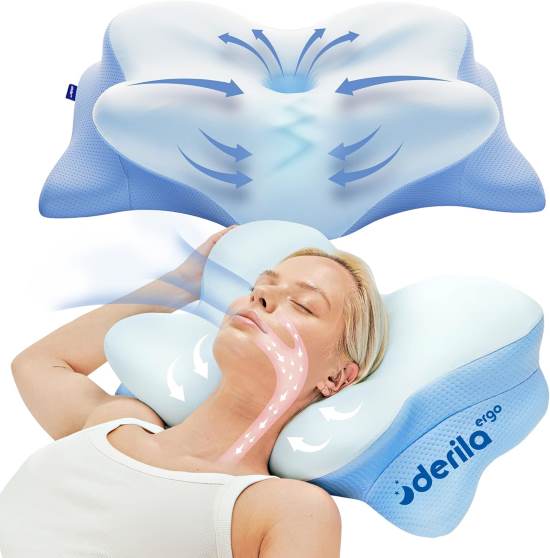
The Derila cervical pillow uses a compact ergonomic contour shape designed to cradle the neck while keeping the head slightly elevated. In actual use, the pillow feels firmer than a standard fiber pillow but not rigid. The memory foam responds slowly to pressure, which helps maintain support throughout the night without flattening.
Its size works well for people who prefer a smaller pillow that encourages consistent head positioning. Side sleepers and back sleepers often notice the neck groove that helps keep the cervical spine aligned.
However, stomach sleepers may find the contour edges slightly restrictive depending on sleep habits. The pillow requires occasional airing out since dense memory foam can trap warmth in warmer environments.
Cleaning remains simple because the removable cover can be washed regularly, while the foam core should only be spot cleaned.
User Review
Daniel K.
“I switched to this pillow after waking up with stiffness every morning. The shape felt unusual for the first couple of nights, but after about a week my neck felt noticeably less tight when I woke up.”
Key Features
Quality: Dense memory foam maintains neck contour support during sleep.
Durability: Foam retains structure with regular nightly use.
Size: Compact design suits smaller beds and travel situations.
Support: Curved neck cradle helps maintain spinal alignment.
Breathability: Fabric cover allows moderate airflow.
Maintenance: Removable cover simplifies routine cleaning.
Adaptability: Works best for side and back sleepers.
Pros and Cons
| Pros | Cons |
| Good cervical contour support | Slightly small for some |
| Memory foam keeps shape | Warmer during summer nights |
| Encourages proper head position | Adjustment period required |
Osteo Cervical Pillow for Neck Pain Relief
Adjustable orthopedic contour pillow
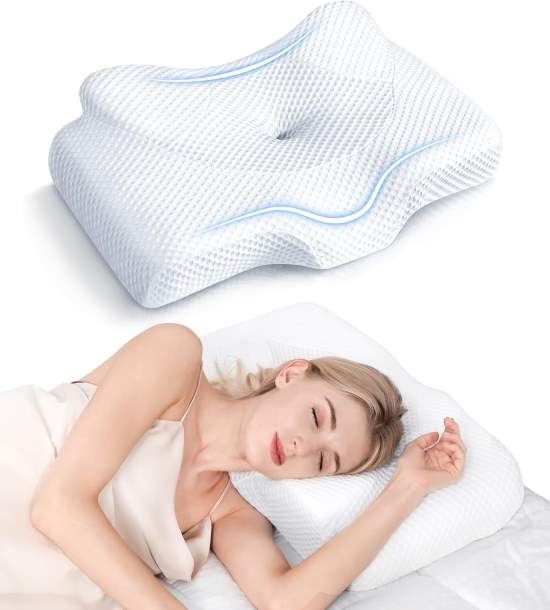
The Osteo cervical pillow focuses heavily on adjustability. Inside the pillow, removable foam layers allow users to change height and firmness. This design proves useful for people who struggle to find the right loft.
The foam itself feels slightly softer than many orthopedic pillows, which helps reduce pressure on the back of the head. Side sleepers often benefit from the deeper side grooves that support shoulder alignment.
The pillow includes ventilation channels that help airflow, making it slightly cooler during long nights.
Maintenance involves washing the outer cover while keeping the foam layers dry. Adjusting the layers occasionally helps maintain comfort as foam naturally compresses over time.
Some users with very broad shoulders may still need additional loft even with all layers installed.
User Review
Melissa R.
“I liked that I could remove layers until the height felt right. After adjusting it twice, the pillow started feeling much more natural for my sleeping position.”
Key Features
Adjustability: Removable foam layers allow customized pillow height.
Comfort: Slightly softer foam reduces pressure points.
Ventilation: Air channels improve airflow during sleep.
Support: Contoured edges support neck curve.
Durability: Foam structure holds shape with daily use.
Maintenance: Removable cover allows easy washing.
Versatility: Supports side back and combination sleepers.
Pros and Cons
| Pros | Cons |
| Adjustable loft design | Setup requires experimentation |
| Breathable foam structure | Not ideal for very tall users |
| Good pressure distribution | Slight learning curve |
Royal Therapy Pharmonis Adjustable Orthopedic Cervical Pillow
Structured contour memory foam pillow
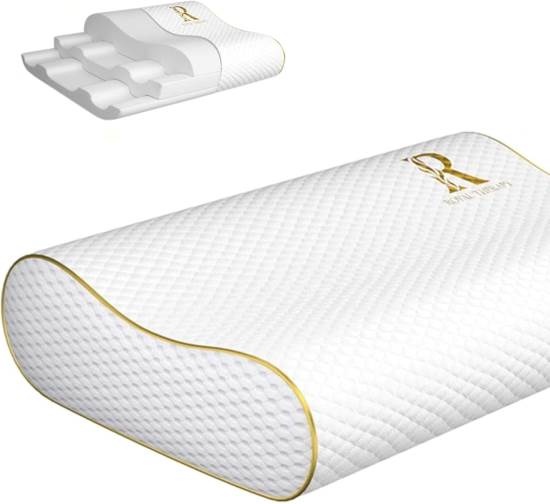
Royal Therapy Pharmonis uses a structured contour shape intended to support both the neck and shoulders. The pillow feels firmer compared with many memory foam options, which benefits sleepers who prefer stronger support.
Side sleepers often appreciate the elevated side wings that fill the space between shoulder and neck. Back sleepers may find the center cradle helpful for keeping the head aligned.
The pillow includes removable inserts that allow some height adjustment. This feature helps people fine tune support if the pillow initially feels too tall.
However, people who prefer very soft pillows may find the firmness slightly excessive during the first few nights.
Cleaning involves removing and washing the cover while keeping the foam dry.
User Review
Kevin S.
“I usually wake up turning my pillow over all night. This one stays supportive and keeps my head from sinking too much.”
Key Features
Support: Firm contour supports neck and shoulders.
Adjustability: Removable insert changes pillow height.
Stability: Dense foam prevents excessive compression.
Comfort: Center cradle holds head position.
Durability: Foam retains firmness over time.
Maintenance: Washable cover simplifies upkeep.
Pros and Cons
| Pros | Cons |
| Firm structured neck support | May feel firm initially |
| Adjustable height insert | Limited airflow |
| Stable sleep positioning | Not ideal for stomach sleepers |
Osteo Cervical Pillow with Breathable Cover
Ventilated contour pillow design
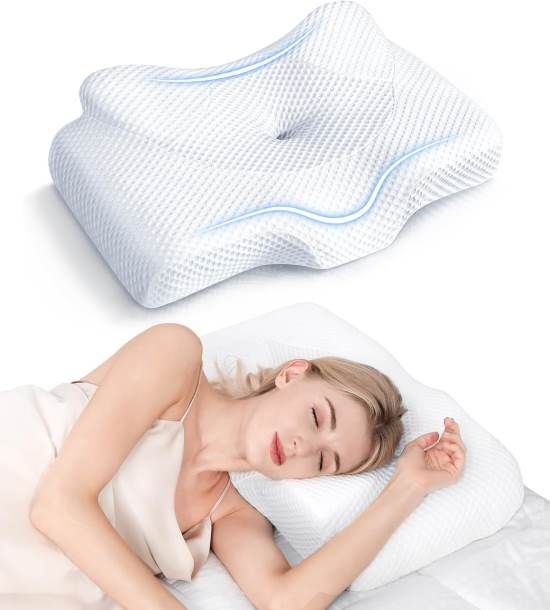
This Osteo pillow version combines orthopedic contour support with a breathable outer cover designed for improved airflow. The foam structure contains small ventilation holes that help dissipate heat overnight.
The contour design works particularly well for people who switch between back and side sleeping. The side edges provide deeper support while the center section keeps the head lower for back sleepers.
Compared with many cervical pillows, this model feels slightly more flexible, which helps reduce pressure when shifting positions.
Maintenance remains straightforward because the breathable cover can be washed frequently. However, the foam still requires careful handling to avoid moisture damage.
People who prefer very high pillows may find the profile slightly moderate.
User Review
Hannah L.
“This pillow feels cooler than most memory foam ones I have tried. I tend to move around at night, and the shape still supports my neck.”
Key Features
Breathability: Ventilated foam improves airflow.
Support: Contoured structure supports neck alignment.
Comfort: Flexible foam adapts to position changes.
Maintenance: Removable breathable cover washable.
Durability: Foam maintains shape over time.
Versatility: Suitable for mixed sleeping styles.
Pros and Cons
| Pros | Cons |
| Cooler airflow design | Moderate loft height |
| Flexible contour support | Foam must stay dry |
| Good for mixed sleepers | Not extremely plush |
Derila Cervical Pillow Orthopedic Contour Pillow
Structured ergonomic support pillow
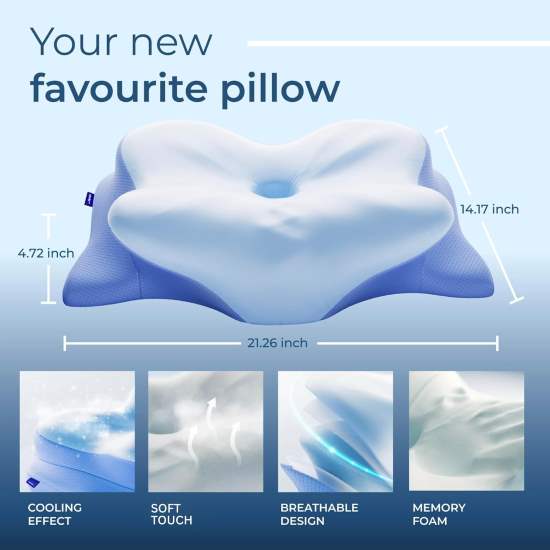
This Derila version focuses on orthopedic contour support with deeper neck grooves. The pillow encourages a consistent sleeping posture that keeps the cervical spine aligned.
The foam density feels moderately firm but responsive. When lying down, the neck groove supports the base of the skull while the side ridges provide elevation for shoulder spacing.
Side sleepers usually benefit the most from this design, especially those who experience shoulder tension during sleep.
The pillow remains relatively compact which makes it easier to travel with. However, larger sleepers may prefer a wider pillow.
Maintenance involves washing the removable cover and occasionally airing the foam core.
User Review
Robert T.
“I travel often and take this pillow with me. It keeps my neck supported even on unfamiliar mattresses.”
Key Features
Support: Deep neck groove promotes alignment.
Comfort: Responsive foam adapts to head pressure.
Portability: Compact shape convenient for travel.
Durability: Foam maintains structure over time.
Maintenance: Washable cover simplifies care.
Compatibility: Best suited for side sleepers.
Pros and Cons
| Pros | Cons |
| Clear neck support contour | Narrow for large sleepers |
| Portable compact size | Limited stomach sleeping comfort |
| Responsive memory foam | Slight adjustment period |
Royal Therapy Pharmonis Contour Memory Foam Pillow
Shoulder supportive contour pillow

This variation of the Royal Therapy pillow emphasizes shoulder support through a wider contour profile. The design helps fill the gap between shoulder and neck for side sleepers.
The foam feels dense but balanced, providing consistent support across the surface. Back sleepers benefit from the center indentation that helps keep the head positioned naturally.
Its shape also encourages better posture during sleep, which may reduce overnight stiffness.
Cleaning remains simple with a removable cover, although the pillow itself should not be submerged.
People who prefer very flat pillows may find the contour height somewhat pronounced.
User Review
Linda P.
“My shoulders usually push my pillow out of place. This one stays steady and keeps my neck from bending awkwardly.”
Key Features
Support: Wide contour supports neck and shoulders.
Comfort: Dense foam provides stable surface.
Alignment: Center cradle maintains head position.
Durability: High density foam resists flattening.
Maintenance: Washable outer cover.
Stability: Shape stays consistent overnight.
Pros and Cons
| Pros | Cons |
| Excellent shoulder support | Higher contour height |
| Stable memory foam surface | Slightly heavier pillow |
| Maintains consistent shape | Limited stomach sleeper comfort |
Cervical Ergonomic Pillow for Sleeping
Orthopedic memory foam support pillow
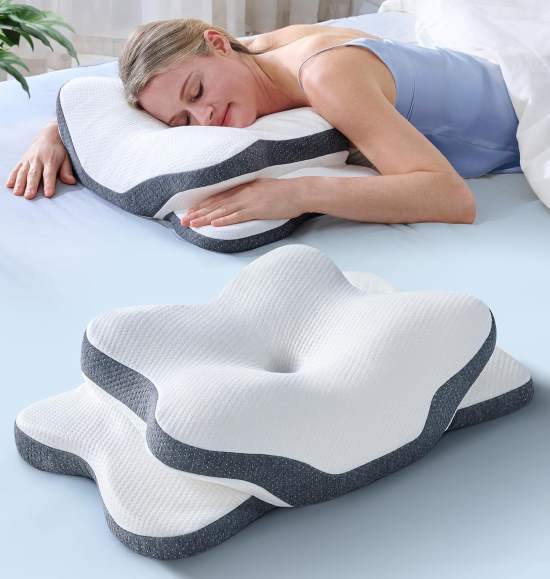
This cervical ergonomic pillow focuses on basic orthopedic contour support without complicated adjustments. The foam structure holds a curved shape that supports the neck while allowing the head to rest comfortably.
The pillow feels moderately firm but becomes slightly softer as body heat warms the foam. This gradual response helps prevent pressure buildup.
It works well for people who want a simple neck support pillow without removable parts or complicated adjustments.
Maintenance involves washing the removable cover and occasionally airing out the foam.
However, sleepers who prefer customized height may find the fixed design somewhat limiting.
User Review
Jason M.
“I wanted something simple that still supported my neck. This pillow feels comfortable after a few nights of getting used to it.”
Key Features
Support: Curved design supports cervical spine.
Comfort: Foam softens slightly with body heat.
Durability: Dense foam resists flattening.
Maintenance: Washable cover easy to maintain.
Simplicity: Fixed structure requires no adjustments.
Stability: Holds consistent sleep position.
Pros and Cons
| Pros | Cons |
| Simple orthopedic contour | No height adjustment |
| Consistent foam support | Slight break in period |
| Easy maintenance routine | Moderate firmness level |
Coop Home Goods Plus Shaped Adjustable Pillow
Highly adjustable memory foam pillow

The Coop Plus shaped pillow differs from most contour pillows by offering a highly adjustable fill system. Instead of a fixed foam block, it uses shredded memory foam that users can add or remove.
This allows the pillow height and firmness to change depending on sleeping position. Side sleepers often add extra fill for shoulder support, while back sleepers reduce the loft.
The breathable cover helps airflow which reduces heat buildup compared with dense foam pillows.
Maintenance requires occasional fluffing to redistribute the foam fill. Washing the cover regularly helps maintain freshness.
However, the adjustable design requires experimentation before finding the right configuration.
User Review
Angela W.
“I liked that I could adjust the fill gradually. After removing some foam, it became one of the most comfortable pillows I have used.”
Key Features
Adjustability: Customizable foam fill changes pillow height.
Comfort: Shredded foam adapts to movement.
Breathability: Cover allows better airflow.
Durability: Foam maintains structure with use.
Maintenance: Cover removable for washing.
Versatility: Suitable for multiple sleeping positions.
Pros and Cons
| Pros | Cons |
| Highly adjustable loft design | Requires setup time |
| Breathable cover material | Needs occasional fluffing |
| Flexible sleep positioning | Not a fixed contour pillow |
Derila Cervical Pillow with Contour Design for Spinal Alignment
Focused spinal alignment pillow

This Derila version emphasizes spinal alignment through a defined contour structure that cradles the neck and stabilizes the head. The foam responds slowly to pressure, helping maintain consistent support throughout the night.
The contour height encourages the neck to remain slightly elevated while the head rests in the central cradle.
This design tends to work best for back sleepers and moderate side sleepers who want structured neck support.
Maintenance remains simple since the outer cover can be removed and washed regularly.
Some sleepers may require several nights to adjust to the structured contour shape.
User Review
Rachel G.
“At first the shape felt unusual, but after a week I noticed my neck felt more relaxed in the morning.”
Key Features
Alignment: Contour shape promotes spinal posture.
Support: Foam cradles neck consistently.
Comfort: Slow response memory foam adapts to pressure.
Durability: Foam retains shape over time.
Maintenance: Washable removable cover.
Stability: Keeps head from rolling excessively.
Pros and Cons
| Pros | Cons |
| Strong spinal alignment support | Adjustment period required |
| Consistent foam structure | Moderate firmness feel |
| Compact ergonomic design | Limited stomach sleeping comfort |
Buying Guide
Choosing a pillow for neck pain involves more than selecting memory foam or a contour shape. Several practical factors determine whether a pillow will actually improve sleep posture and reduce discomfort.
What Actually Matters Before Choosing
Core Performance Factors
The most important function of a neck support pillow involves maintaining neutral spinal alignment. When the pillow height or shape does not match your sleeping position, the neck bends upward or downward during sleep. This constant strain often leads to morning stiffness.
Many buyers assume a firm pillow automatically provides better support. In reality, support depends on how the pillow fills the gap between the neck and mattress, not simply how firm it feels.
Side sleepers typically need higher loft pillows to fill shoulder space. Back sleepers require moderate height that supports the neck curve while keeping the head slightly lower.
Material Quality and Durability
Memory foam remains one of the most common materials in cervical pillows because it maintains shape under pressure. However, foam density varies widely.
Lower density foam often compresses after several months of use. This leads to reduced neck support and forces sleepers to replace pillows more frequently.
Higher density foam lasts longer but may feel firmer initially. Buyers sometimes misinterpret this firmness as discomfort when it actually reflects stronger structural support.
Comfort and Usability
Comfort depends on several factors beyond softness. The pillow must allow natural movement during sleep while still supporting the neck curve.
Some contour pillows lock the head into a fixed position. While this helps alignment, it can feel restrictive for people who change positions frequently.
Adjustable pillows address this issue by allowing loft customization, but they require some experimentation to find the correct configuration.
Maintenance and Long Term Ownership
Memory foam pillows require simple but consistent maintenance. Removable covers should be washed regularly to remove sweat and oils that accumulate during sleep.
The foam core itself should remain dry. Moisture can degrade foam structure and reduce durability.
Owners should also rotate or air out the pillow occasionally to prevent odor buildup and maintain freshness.
Environmental and Situational Compatibility
Room temperature and climate influence pillow comfort more than many people realize.
Memory foam naturally retains heat. In warmer climates, pillows with ventilation holes or breathable covers can improve airflow and reduce nighttime warmth.
Sleepers in cooler environments may actually prefer denser foam that retains warmth.
Safety Considerations
Quality foam pillows often carry certifications that indicate low chemical emissions during manufacturing.
While many buyers overlook this detail, it can affect indoor air quality especially in smaller sleeping spaces.
Using breathable pillow covers and maintaining regular cleaning helps minimize allergens and dust buildup.
Related:
Best Affordable Bed Positioning Wedge Pillows 2026: Which Design Gives the Most Comfortable Bed Support?
How to Reduce Hip Joint Stress With an Abduction Pillow
Common Buyer Mistakes
Many people purchase pillows based solely on softness. A soft pillow can feel comfortable at first but may allow the neck to collapse into an unnatural angle during sleep.
Another common mistake involves choosing pillows based on marketing claims instead of actual sleep position. A pillow designed for side sleepers rarely works well for stomach sleepers because the height forces the neck upward.
Some buyers also replace pillows too quickly before adjusting to the new support structure. Orthopedic pillows often require several nights before the body adapts to improved alignment.
Another misunderstanding involves assuming one pillow shape suits everyone. Shoulder width, mattress firmness, and body weight all influence the ideal pillow height.
Finally, buyers sometimes ignore maintenance requirements. Even high quality foam pillows lose performance if covers remain unwashed or foam becomes compressed from improper storage.
How to Match Products to Specific Needs
Different sleep habits require different pillow designs.
Casual sleepers who move between several positions during the night often benefit from adjustable pillows with removable foam layers or shredded foam fill. These designs adapt more easily to changing positions.
Heavy daily users who prioritize long term durability may prefer dense contour memory foam pillows. These maintain consistent support and resist flattening over time.
People with limited bed space or who travel frequently may prefer compact contour pillows that maintain shape without constant adjustment.
Budget conscious buyers should focus on durability rather than softness. A pillow that maintains structure for several years often provides better long term value.
Advanced users who carefully track sleep posture may prefer adjustable pillows that allow precise height customization based on mattress firmness and shoulder width.
Ultimately, the best pillow depends on how it supports the neck during several hours of uninterrupted sleep rather than how it feels during the first few minutes of testing.
Conclusion
Neck support pillows aim to solve a common problem that many sleepers overlook. Proper cervical alignment during sleep can reduce muscle tension and improve overall comfort when waking up.
Contour memory foam pillows often provide stable support, while adjustable designs allow more flexibility for different sleeping positions.
The key lies in choosing a pillow that matches your sleep posture, shoulder width, and comfort preferences rather than relying on general claims about firmness or softness.
Evaluating these factors carefully helps sleepers find a pillow that supports healthier sleep posture and more comfortable mornings.
FAQs
Can a pillow really help reduce neck pain?
Yes, a pillow that supports proper spinal alignment can reduce pressure on neck muscles during sleep.
How often should a cervical pillow be replaced?
Most memory foam cervical pillows maintain support for about two to three years with regular use.
Are contour pillows good for side sleepers?
Yes, many contour pillows provide deeper side edges that support the neck and shoulder gap.
Do memory foam pillows sleep hot?
Some retain heat, but ventilated foam or breathable covers help improve airflow.
Is an adjustable pillow better than a fixed contour pillow?
Adjustable pillows offer flexibility, while contour pillows provide more consistent structured support.