
Finding the best pillow for your toddler can feel like navigating a maze. You want to ensure they’re comfortable, safe, and getting the restful sleep they need for healthy development. But with so many options available, where do you even begin? Let’s explore how to pick the best pillow for toddler by breaking down the essential factors to consider, ensuring your little one enjoys blissful nights and energized days.
Why a Toddler Pillow Matters
Transitioning from a crib to a toddler bed is a significant milestone, and with it comes the question of a pillow. While not all toddlers need a pillow immediately, it can provide added comfort and support as they grow. A proper pillow helps align their spine and neck, preventing discomfort and promoting better sleep quality.
- A well-chosen pillow supports proper neck and spinal alignment.
- It can contribute to a more comfortable and restful sleep.
- It aids in the transition to a “big kid” bed.
Key Factors to Consider When Choosing the Best Pillow for Toddler
When searching for the ideal sleep companion for your child, several critical aspects come into play. Let’s delve into each one to ensure you make an informed decision.
-
Pillow Size and Loft
Toddler pillows are smaller and flatter than standard adult pillows. This design is crucial for preventing neck strain.
- Look for pillows specifically designed for toddlers, typically around 13×18 inches.
- The “loft” or thickness should be low, around 2-3 inches, to maintain proper alignment.
- Avoid overly fluffy or thick pillows that can elevate the head too much.
-
Pillow Fill Material: Safety and Comfort
The fill material directly impacts comfort and safety. Hypoallergenic options are essential for sensitive little ones.
- Hypoallergenic Options: Look for fills like organic cotton, bamboo, or microfiber. These are less likely to trigger allergies.
- Avoid Down Feathers: Down can be an allergen and may pose a choking hazard if the pillow tears.
- Memory Foam Considerations: While supportive, ensure it’s a certified safe, low-VOC memory foam designed for children.
-
Pillow Firmness and Support
Toddlers need a pillow that provides gentle support without being too firm or too soft.
- Medium-soft firmness is generally recommended.
- The pillow should contour slightly to the head and neck without sinking too much.
- Test the pillow’s resilience by pressing on it; it should spring back gently.
-
Fabric and Breathability
A breathable cover helps regulate temperature, preventing overheating during sleep.
- Choose natural, breathable fabrics like organic cotton or bamboo.
- Avoid synthetic materials that can trap heat and moisture.
- Look for covers that are easily removable and machine-washable.
-
Safety Certifications
Prioritize pillows with safety certifications to ensure they’re free from harmful chemicals.
- Oeko-Tex Standard 100: This certification ensures the pillow is free from harmful substances.
- CertiPUR-US: For foam pillows, this guarantees they meet strict standards for emissions and durability.
- Always check the product label for relevant safety certifications.
Types of Toddler Pillows
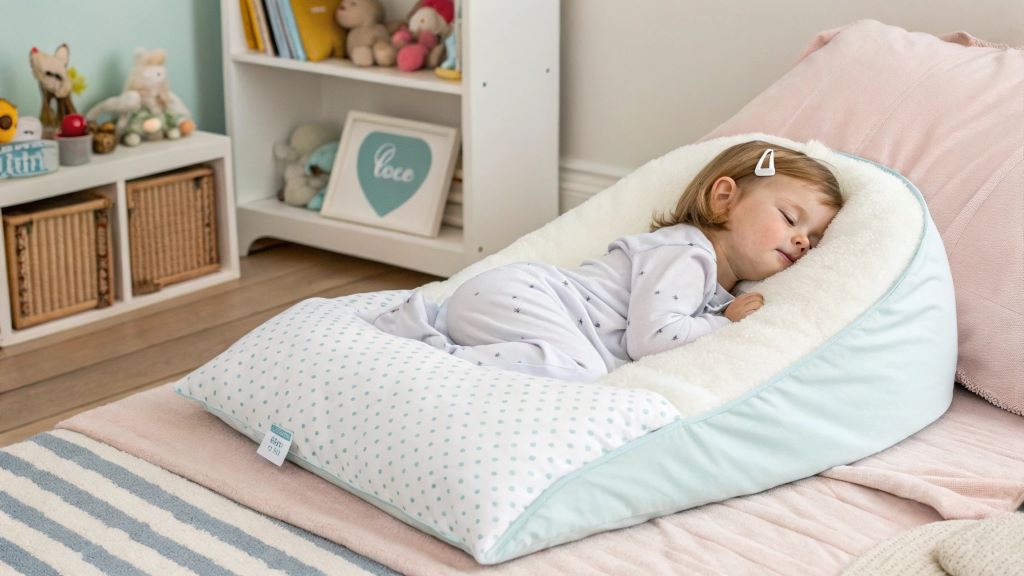
Understanding the different types of pillows can help you narrow down your choices.
-
Organic Cotton Pillows
These are a popular choice due to their natural, hypoallergenic properties.
- Made from organic cotton fibers, they’re gentle on sensitive skin.
- They provide soft, breathable support.
- Often machine-washable for easy care.
-
Bamboo Pillows
Bamboo offers excellent breathability and moisture-wicking properties.
- Naturally hypoallergenic and antimicrobial.
- Soft and silky texture.
- Helps regulate temperature for comfortable sleep.
-
Microfiber Pillows
These are a cost-effective and hypoallergenic option.
- Soft and lightweight.
- Machine-washable and durable.
- Good for toddlers with allergies.
-
Memory Foam Toddler Pillows
If you choose memory foam, ensure it is certified safe.
- Provides contoured support.
- Ensure it is a low VOC version, designed for child use.
- Can be more expensive, but worth it for those who need extra support.
Pillows for Children with Sensory Sensitivities: Comfort and Calming Effects
Maintaining Your Toddler’s Pillow
Proper care extends the life of your toddler’s pillow and maintains its hygiene.
- Use a pillow protector to shield against spills and stains.
- Wash the pillow regularly according to the manufacturer’s instructions.
- Fluff the pillow periodically to maintain its shape.
- Replace the pillow every 1-2 years, or sooner if it shows signs of wear.
When to Introduce a Pillow
There’s no hard and fast rule, but most experts recommend introducing a pillow around 18 months to 2 years, or when they transition to a toddler bed.
- Observe your child’s sleeping habits; if they’re consistently using a blanket or stuffed animal as a makeshift pillow, it might be time.
- Ensure they have good head and neck control before introducing a pillow.
- Always prioritize safety and comfort.
Making the Right Choice for Your Little One
Choosing the best pillow for your toddler is a significant step in ensuring their comfort and well-being. By considering factors like size, fill material, and safety certifications, you can make an informed decision that promotes restful sleep. Remember that every child is unique, so what works for one may not work for another.
Call to Action: Ready to give your toddler the gift of sweet dreams? Explore our curated selection of safe and comfortable toddler pillows today! Invest in their restful sleep and watch them wake up refreshed and ready for a day of adventures. Browse our recommendations now and make bedtime a breeze!
Read More:
PILLOWS FOR STOMACH SLEEPERS WITH BACK PAIN: FINDING THE RIGHT SUPPORT

