
Key Takeaways
- Velvet pillow covers are an easy way to add softness, depth, and a more polished look to a room.
- The best velvet pillow cover is not simply the softest one—it should fit your pillow insert properly, suit your decor, and match your cleaning routine.
- Pay attention to the velvet’s fiber content, pile, stitching, closure, and care instructions before buying.
- For a fuller decorative look, a well-fitted cover and properly sized insert matter just as much as the fabric itself.
- Velvet works especially well on sofas, accent chairs, beds, benches, and layered bedding arrangements.
- Regular brushing, careful spot cleaning, and following the manufacturer’s care label can help preserve the fabric’s texture and appearance.
- Mixing velvet with linen, cotton, boucle, or woven textures can keep a room from looking overly formal.
Why Velvet Pillow Covers Are Still a Great Decorating Choice
There is a reason velvet keeps finding its way back into American homes. It has a distinctive depth that many flat-woven fabrics simply cannot replicate.
The surface of velvet has a raised pile that catches light differently depending on the direction of the fibers. That subtle change in light is what gives a velvet pillow cover its rich, dimensional appearance. A single pillow can make a sofa feel more finished without requiring a major decorating overhaul.
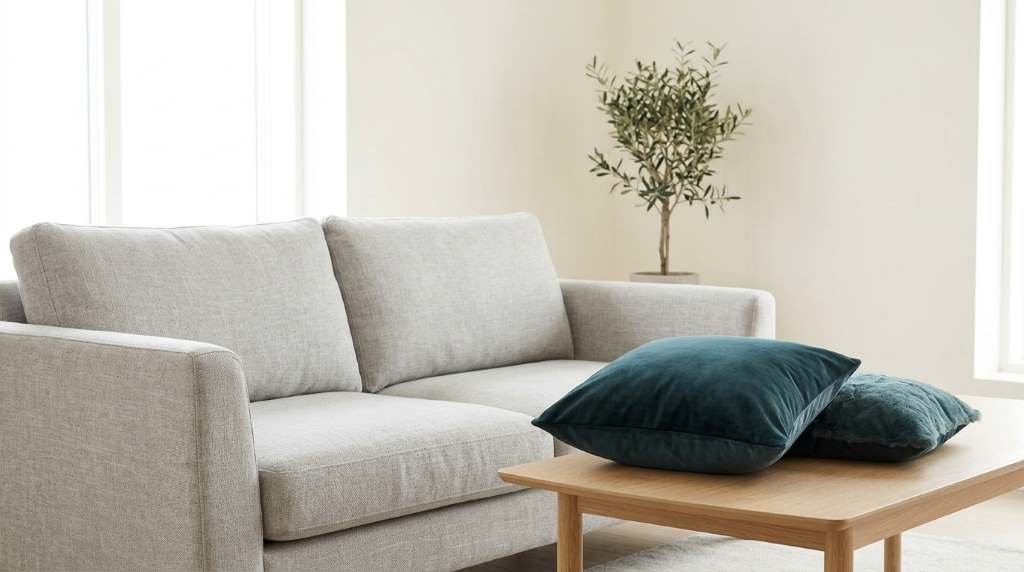
Velvet also works across a surprisingly broad range of interiors. It can look elegant in a traditional living room, warm and inviting in a transitional space, or surprisingly modern when paired with clean lines and neutral furniture.
But buying velvet pillow covers is not just about picking a pretty color. Size, construction, fabric composition, closure style, and maintenance all affect whether the cover will actually work well in your home.
What Makes a Good Velvet Pillow Cover?
A quality velvet pillow cover should balance appearance, construction, comfort, and practicality.
1. A Consistent Velvet Pile
The pile is the raised surface that gives velvet its characteristic softness and sheen. Run your hand across the fabric and you may notice that the color appears slightly different depending on which direction you touch it.
That is normal.
What you want to avoid is a surface that looks uneven, excessively thin, or poorly finished. Consistent pile generally creates a more refined appearance and helps the pillow look intentional rather than inexpensive.
2. Strong Seams
Decorative pillows get more use than many people realize. They are leaned against, moved around, tossed onto chairs, and occasionally end up on the floor.
Look for neatly finished seams and stitching that does not appear loose or uneven. A beautiful fabric will not compensate for weak construction.
3. A Practical Closure
Zippers are popular because they make covers relatively easy to remove and replace. A concealed zipper can also create a cleaner appearance.
Envelope-style closures are another option and can work well when simplicity is the priority.
Neither closure is automatically better. Consider how frequently you expect to remove the cover and whether easy laundering matters in your household.
4. The Right Fabric Composition
“Velvet” describes the fabric’s characteristic pile rather than one single fiber. Velvet can be produced from different materials, and those materials influence its feel, durability, sheen, and care requirements.
Synthetic velvet can be practical for decorative applications, while natural-fiber velvet may offer a different hand feel and appearance.
The smartest approach is to check the product’s actual fiber content rather than assuming every velvet cover will behave the same way.
How to Choose the Right Velvet Pillow Cover Size
Size is one of the easiest details to overlook—and one of the most noticeable once the pillow is on your sofa.
Common decorative pillow dimensions include square formats such as 18-by-18 and 20-by-20 inches, along with rectangular lumbar shapes. However, the correct choice depends on your existing furniture and pillow inserts.
For a tailored appearance, the cover should fit the insert without excessive empty space.
If the cover is noticeably larger than the insert, the pillow can look flat and underfilled. If the insert is too large for the cover, the fabric may become excessively strained and the seams can take unnecessary stress.
A simple sizing approach
Start by measuring the pillow insert you already own.
Then compare those measurements with the manufacturer’s stated cover dimensions. Do not rely solely on photographs because perspective can make pillows look larger or smaller than they really are.
For decorative styling, you can also combine several dimensions rather than using identical pillows across an entire sofa.
For example, a large square pillow can establish the base layer, while a smaller square and a lumbar pillow create visual variation in front.
How to Choose Velvet Pillow Cover Colors
Color is where velvet gets particularly interesting.
Because velvet reflects light differently across its pile, the same color can appear deeper or lighter depending on lighting and viewing angle.
That makes rich colors especially effective.
Deep green, navy, burgundy, charcoal, chocolate, rust, and jewel tones can give a room a dramatic accent. Meanwhile, cream, beige, taupe, dusty rose, and soft gray can create a quieter look.
If your furniture is already visually busy, a solid velvet cover may be the better choice. If your room is mostly neutral, a saturated velvet pillow can become an intentional focal point.
Match undertones, not just colors
A common decorating mistake is matching colors too literally.
Instead of trying to find a pillow that is exactly the same shade as your rug or curtains, look at the undertones.
Warm beige furniture generally works naturally with warm browns, terracotta, camel, cream, and muted greens. Cooler gray furniture may pair more naturally with blue, charcoal, lavender, or cool green.
The goal is coordination rather than duplication.
How to Style Velvet Throw Pillow Covers
Velvet is most effective when it is balanced with other textures.
If every pillow on a sofa is velvet, the arrangement can become visually heavy. Instead, treat velvet as one layer within a larger composition.
Try combining:
- Velvet with linen for contrast
- Velvet with cotton for a relaxed feel
- Velvet with boucle for additional texture
- Velvet with woven fabrics for a casual look
- Velvet with leather furniture for a more sophisticated contrast
You can also vary the scale of your patterns.
For example, use a solid velvet pillow as the anchor, add a patterned pillow in front, and finish with a smaller lumbar pillow.
This creates depth without making the sofa look cluttered.
Velvet does not have to look formal
This is worth emphasizing.
Velvet sometimes gets associated with traditional or luxurious interiors, but the fabric itself does not dictate the entire style of a room.
A simple solid velvet pillow in a muted color can look perfectly at home in a contemporary apartment.
The surrounding furniture, color palette, pillow shapes, and accessories determine the overall effect.
Where Should You Use Velvet Pillow Covers?
Living Room
The living room is probably the easiest place to use velvet decorative pillows. Place them on a sofa, sectional, accent chair, or window seat to introduce texture without replacing major furniture.
Bedroom
Velvet pillow covers can add depth to a layered bed. Use them as decorative pillows behind sleeping pillows rather than treating every pillow as part of the sleeping setup.
This makes it easier to remove the decorative pieces at night.
Accent Chair
A single velvet pillow can give an otherwise simple accent chair more personality.
This works particularly well when the pillow picks up a color already present elsewhere in the room.
Bench or Entryway
A lumbar velvet pillow can soften a hard bench and make an entryway feel more welcoming.
Just remember that high-contact areas generally require more frequent cleaning and maintenance.
What About Miulee Velvet Pillow Covers?
Miulee is a familiar name in the decorative pillow-cover category, particularly among shoppers looking for affordable ways to change the appearance of a room without purchasing entirely new pillows.
If you’re specifically considering Miulee covers, it makes sense to evaluate the same fundamentals you would use for any brand: dimensions, material, zipper or closure construction, color, insert compatibility, and care instructions.
For readers who want to explore that particular option in more detail, see our guide to Miulee velvet pillow covers in Pennsylvania.
The important point is not to choose a cover solely because a brand is recognizable. Your room, pillow insert, intended use, and maintenance expectations should determine whether a particular cover is right for you.
How to Care for Velvet Pillow Covers
Velvet has a reputation for being difficult to maintain, but the biggest rule is actually quite simple: follow the care label first.
Different velvet constructions can have very different cleaning requirements.
Some covers may allow gentle machine washing, while others may call for hand washing or professional cleaning. Assuming that every velvet pillow cover can go into the washer is a good way to damage an otherwise attractive cover.
For general maintenance:
- Remove dust regularly. A soft brush or gentle vacuum upholstery attachment can help keep the surface fresh.
- Blot spills quickly. Avoid aggressive rubbing, which can disturb the pile and spread the stain.
- Use mild cleaning methods. Harsh chemicals and bleach can damage fabric or affect color.
- Avoid unnecessary heat. High temperatures can cause problems with certain velvet constructions.
- Never ignore the care label. The manufacturer’s instructions should take priority over generic cleaning advice.
If a removable cover is approved for machine washing, a gentle cycle and appropriate temperature are generally preferable to aggressive laundering. If the label says otherwise, follow that instruction.
What If Velvet Looks Crushed or Flattened?
Flattened areas are one of the most common complaints about velvet.
The good news is that a crushed-looking area does not necessarily mean the fabric is permanently damaged.
The pile can sometimes be refreshed with gentle steaming, depending on the specific fabric. The key is to avoid pressing a hot iron directly onto the velvet surface. Direct pressure can flatten the pile and create unwanted shiny areas.
A soft brush can also help realign the fibers after the fabric has been refreshed.
Always test any technique on a hidden area first, particularly when you are unsure about the fabric composition.
Velvet vs. Other Popular Pillow Cover Fabrics
| Fabric | Overall Look | Texture | Maintenance | Best For |
| Velvet | Rich and dimensional | Plush | Moderate | Accent pillows and layered decor |
| Linen | Relaxed and natural | Textured | Moderate | Casual and coastal interiors |
| Cotton | Clean and versatile | Soft | Usually easy | Everyday decorative use |
| Boucle | Cozy and tactile | Nubby | Moderate | Modern, cozy interiors |
| Polyester blends | Versatile | Varies | Often practical | High-use decorative areas |
There is no universally “best” pillow-cover fabric.
A family with pets may prioritize easy maintenance. Someone decorating a formal sitting room may care more about texture and appearance. A minimalist may prefer linen or cotton, while someone building a layered, luxurious look may naturally gravitate toward velvet.
The right choice is the one that fits the room and your lifestyle.
Common Mistakes to Avoid When Buying Velvet Pillow Covers
Buying the wrong size
A cover that does not fit its insert properly can make even expensive-looking fabric appear sloppy.
Ignoring the care instructions
Velvet is not one uniform material. Always check the manufacturer’s instructions.
Choosing color from a screen alone
Online photos can vary significantly because of lighting, photography, and individual screen settings. If the exact shade matters, consider ordering a sample when available.
Using too much velvet
One or two velvet accents can create contrast. Covering every pillow, chair, and accessory in velvet can make a room feel overly heavy.
Focusing only on appearance
Inspect the closure, stitching, dimensions, material, and return policy before buying.
A beautiful pillow cover that does not fit your insert or suit your cleaning routine is not a good purchase.
Are Velvet Pillow Covers Worth It?
For many homeowners, yes.
A pillow cover is one of the simplest ways to change a room without committing to a large furniture purchase. Velvet adds something that photographs often struggle to capture: tactile depth.
It catches the light, feels soft, and can make a relatively ordinary pillow arrangement look considerably more intentional.
The value becomes even more apparent when you already own good pillow inserts. Instead of buying entirely new decorative pillows every time you want to update a room, you can change the covers and keep the inserts.
That gives you considerably more flexibility with seasonal decorating and style changes.
Frequently Asked Questions
Are velvet pillow covers good for everyday use?
Yes, velvet pillow covers can work well for everyday decorative use. The important factors are the specific fabric construction, quality of the cover, and how much wear the pillow receives.
For busy households, prioritize durable construction and manageable care requirements.
Should a velvet pillow cover be bigger than the insert?
Not necessarily. A well-matched cover and insert generally create the cleanest appearance. The exact sizing strategy can vary depending on how full you want the finished pillow to look, so always check the manufacturer’s measurements.
Are velvet pillow covers hard to clean?
They can require more care than some basic cotton or polyester covers, but they are not automatically difficult to maintain. The biggest mistake is using a cleaning method that conflicts with the manufacturer’s instructions.
Can you wash velvet pillow covers in a washing machine?
Some can, but not all. Check the care label before washing. If machine washing is permitted, use the recommended cycle and temperature rather than assuming a standard wash is safe.
How do you keep velvet pillow covers from looking crushed?
Avoid excessive pressure, rough handling, and improper heat. Gentle brushing and, where appropriate for the fabric, careful steaming can help restore the pile.
Do velvet pillow covers make a room look more expensive?
They can. Velvet’s pile creates depth and light variation that often gives decorative pieces a richer appearance. The effect is strongest when velvet is used selectively and coordinated with the room’s other textures.
What colors of velvet pillow covers are easiest to decorate with?
Neutral shades such as cream, taupe, gray, beige, and charcoal are highly versatile. Deep greens, navy, rust, and burgundy are useful when you want a stronger accent.
Should all my throw pillows match?
No. Coordinating colors and textures generally creates a more interesting arrangement than making every pillow identical. Start with a common color palette, then vary size, texture, and pattern.
Final Thoughts
The best velvet pillow covers are not necessarily the most expensive or the most dramatic. They are the ones that fit correctly, complement the room, feel appropriate for the intended use, and can be maintained without becoming a constant chore.
Before buying, look beyond the product photo. Check the measurements, fabric composition, closure, construction, and care instructions. Then consider how the cover will work with the furniture and textiles you already own.
Velvet is especially effective when used as a textural accent rather than a decorating rule. Pair it with linen, cotton, boucle, woven fabrics, or simple neutral textiles, and it can add exactly the kind of warmth and dimension that makes a room feel finished.
Most importantly, choose for your actual home—not just for the way a pillow looks in an online photograph. A beautiful cover that fits your lifestyle will always be a better choice than one that looks impressive but requires more maintenance than you’re willing to give it.

