Spending a lazy afternoon at the beach sounds like pure bliss. However, lying on a flat towel for hours can leave your back feeling stiff and sore. That is where beach pillows come in. These simple accessories can make a big difference in how comfortable you feel while soaking up the sun. In this guide, you will learn how to use beach pillows correctly to protect your back and enjoy every minute outdoors.
Why Back Support Matters at the Beach
Most people do not think about posture when they head to the beach. They grab a towel, find a sunny spot, and lie down. But lying on an uneven or flat surface for a long time puts stress on your spine. This can cause lower back pain, neck stiffness, and muscle tension.
Additionally, sand is not a perfectly flat surface. It shifts and compresses under your weight. Without proper support, your spine curves in ways it should not. Over time, this leads to discomfort that can ruin your beach day.
Therefore, investing in a good beach pillow is not a luxury. It is a smart move for anyone who loves spending time outdoors.
What Is a Beach Pillow?
A beach pillow is a specially designed cushion made for outdoor use. It is different from a regular pillow in several ways. Beach pillows are usually water-resistant or waterproof. They are also lightweight and easy to carry. Many fold or roll up for convenient transport.
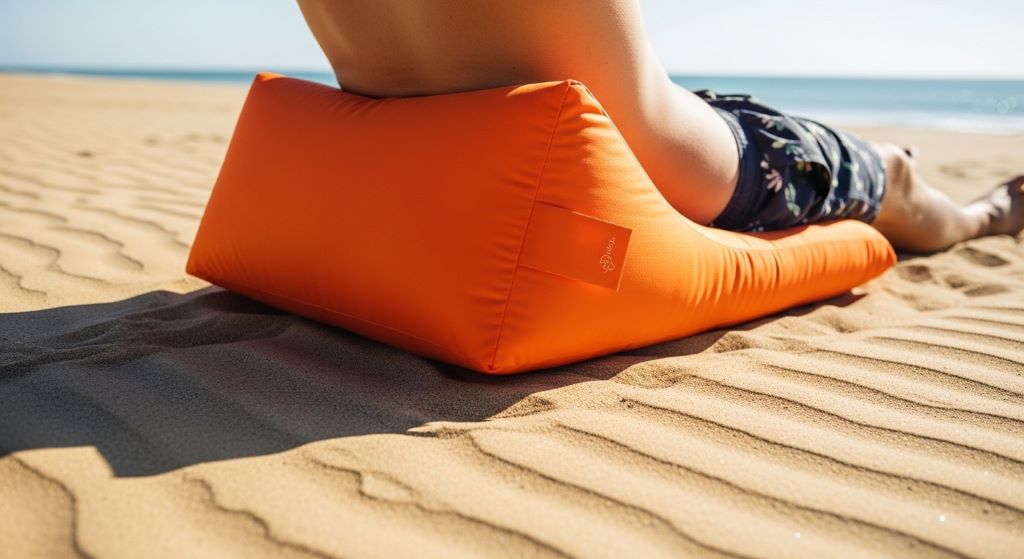
Some beach pillows are flat and wide, offering full back support. Others are wedge-shaped, propping your upper body at an angle. There are also inflatable versions that you can adjust to your preferred firmness. Each type serves a slightly different purpose, so choosing the right one matters.
Types of Beach Pillows for Back Support
Understanding the different types helps you pick the best one for your needs.
Wedge Beach Pillows
Wedge pillows are thick at one end and thin at the other. When you lie on them, they tilt your body slightly upward. This position takes pressure off your lower back and encourages a more natural spinal curve. Therefore, wedge pillows are ideal for people who already experience lower back discomfort.
Inflatable Beach Pillows
Inflatable pillows are popular because they are easy to pack. You can blow them up when you arrive and deflate them when you leave. They fit easily into a beach bag. However, the firmness depends on how much air you put in. A firmer pillow offers more lumbar support, while a softer one feels more cushion-like.
Lumbar Support Beach Cushions
These cushions are designed specifically to support the lower back. They often have a curved shape that fits the natural hollow of your spine. You can use them behind your back when sitting up or tuck them under your lower back when lying down. Additionally, many come with adjustable straps to keep them in place.
Pillow-Mats Combo
Some products combine a beach mat with a built-in headrest or back pillow. These all-in-one solutions are great for travelers who want to carry fewer items. They provide a firm, even surface along with cushioning where you need it most.
How to Position a Beach Pillow for Maximum Back Support
Buying the right pillow is only half the job. Knowing how to position it correctly is just as important.
When Lying on Your Back
Place the beach pillow under your knees, not just behind your head. This is a key tip many people overlook. When your knees are slightly raised, your lower back flattens naturally against the surface beneath you. This reduces the arch in your spine and relieves pressure on your lumbar region.
You can also place a small rolled towel or lumbar pillow under the curve of your lower back. This fills the natural gap between your spine and the ground. However, make sure it is not too thick. A pillow that is too large will push your back forward and create new tension.
When Lying on Your Side
Side sleeping on the beach is comfortable for many people. If this is your preferred position, place the beach pillow between your knees. This keeps your hips aligned and prevents your spine from twisting. Additionally, use a standard beach pillow under your head to keep your neck in a neutral position.
When Sitting Up
Not everyone lies flat at the beach. Many people sit upright to read, chat, or watch the waves. In this case, place a lumbar pillow behind your lower back. It should rest in the curve of your spine, just above your hips. This supports the natural inward curve of your lumbar spine and prevents slumping.
If you are leaning against a beach chair or cooler, the same rule applies. Therefore, always bring a small lumbar cushion even if you plan to sit rather than lie down.
Choosing the Right Beach Pillow for Your Back
With so many options available, it helps to know what to look for before you buy.
Firmness
A pillow that is too soft will not provide real support. Your body will sink into it, and your spine will curve incorrectly. Look for a pillow with medium to firm density. It should hold its shape even when you press your full weight onto it.
Material
Beach pillows need to handle heat, moisture, and sand. Look for covers made from quick-dry fabric. Memory foam fills are comfortable but can retain heat. Inflatable versions work well in warm climates because they do not trap body heat as much. Additionally, a removable and washable cover is a huge bonus.
Size and Portability
Think about how much space you have in your beach bag. A large, bulky pillow might be very comfortable, but it is hard to carry. Inflatable and foldable options solve this problem. However, they sometimes sacrifice a little support for the sake of convenience.
Shape
As mentioned earlier, wedge-shaped pillows support the lower back differently than flat ones. Choose based on how you usually spend your time at the beach. If you lie down most of the time, a knee wedge and a lumbar roll work well together. If you sit up often, a curved lumbar cushion is the better choice.
Common Mistakes to Avoid
Even with a good beach pillow, mistakes can reduce its effectiveness.
Using the pillow only under your head is a very common error. Your head actually needs less support than your lower back. Placing all the cushioning under your neck lifts it too high and strains your cervical spine.
Another mistake is lying in one position for too long. Even with great support, staying still for hours causes stiffness. Therefore, shift your position every 30 to 45 minutes. Stretch your legs, roll onto your side, or sit up for a few minutes before lying back down.
Additionally, many people ignore the surface beneath them. A thick beach mat under your towel adds another layer of cushioning. This helps prevent hard or uneven sand from working against your pillow’s support.
Extra Tips for a Pain-Free Beach Day
A few additional habits can make your back feel even better after a long day at the beach.
Stay hydrated. Dehydration causes your spinal discs to lose moisture. This makes your back more prone to pain and injury. Drink water regularly throughout the day, even if you do not feel thirsty.
Do some gentle stretches before you lie down. Simple moves like knee-to-chest pulls and hip rolls prepare your muscles for extended rest. They also improve circulation, which reduces stiffness.
Bring a small bag or folded towel to adjust your setup as needed. If your pillow slips or shifts, your alignment changes. A quick adjustment can prevent hours of discomfort.
Furthermore, try to lie in a shaded area when possible. Extreme heat causes muscles to tense up. A cooler environment actually helps your body relax and accept support more naturally.
Conclusion
Using a beach pillow for back support is one of the easiest ways to upgrade your sunbathing experience. The right pillow, placed in the right position, protects your spine and keeps you comfortable for hours. Whether you prefer lying flat, resting on your side, or sitting upright, there is a beach pillow designed for your needs.
Remember to choose a pillow with the right firmness, material, and shape. Position it under your knees or lower back when lying down, and behind your lumbar region when sitting. Avoid common mistakes like placing all support under your neck. Also, take short breaks to stretch and move around.
With a little preparation, you can enjoy a full, relaxing day at the beach without paying for it with back pain the next morning.
Frequently Asked Questions
1. Can I use a regular pillow at the beach instead of a beach pillow?
You can, but it is not ideal. Regular pillows are not designed for outdoor use. They absorb moisture quickly, get sandy, and lose their shape in the heat. A beach-specific pillow is more durable and hygienic for outdoor conditions.
2. Where exactly should I place a beach pillow for lower back pain?
Place it under your knees when lying on your back. This flattens your lumbar curve naturally. You can also use a small lumbar roll under the hollow of your lower back for additional support.
3. Are inflatable beach pillows good for back support?
Yes, inflatable pillows can offer decent support if inflated firmly enough. They are a great portable option. However, for people with chronic back pain, a structured foam or wedge pillow may provide better and more consistent support.
4. How often should I change position while sunbathing?
Aim to shift your position every 30 to 45 minutes. Lying in the same position for too long causes muscle tension and joint stiffness, even with proper pillow support. Short breaks and gentle stretches help keep your back comfortable.
5. Can children use beach pillows for back support?
Yes, many compact beach pillows are suitable for children. However, children generally need less lumbar support than adults. A lightweight, foldable pillow under their knees or as a headrest is usually enough for comfortable sunbathing.
Related Topics:
What Is the Difference Between a Duvet and a Comforter?
The Ultimate Guide to Buckwheat Hull Pillows for Adjustable Firmness